
Academic Research Assistant Role and Responsibilities, Decoded
Written with AI assistance under our editorial guidelines
An academic research assistant supports faculty and researchers across laboratories, archives, and think tanks by handling essential tasks like data management, literature review, and participant recruitment. The role has evolved from informal, unpaid support to a recognized career stepping stone with codified expectations, though it remains often underappreciated despite being fundamental to scholarly productivity and research credibility.
The title “Academic Research Assistant” carries a seductive academic sheen—a badge of intellectual ambition, a golden ticket to the inner sanctum of knowledge production. But peel back the curtain, and you’ll see a reality more complicated, more exhausting, and, yes, far more interesting than the sanitized job descriptions suggest. In 2025, with over 191,965 research assistants in the U.S. alone and a projected job growth of 19% over the last decade, the academic research assistant role and responsibilities have never been more crucial—or more misunderstood. This article rips off the veneer, exposes the hidden truths, and delivers a no-nonsense guide to thriving (or surviving) as an academic research assistant. Whether you’re chasing your first RA gig, looking to hire, or just trying to make sense of this complex position, buckle up. You’re about to uncover the real story behind one of academia’s most pivotal, and least appreciated, jobs.
Behind the curtain: What is an academic research assistant really?
The origin story: A brief history of the role
Academic research assistants (ARAs) didn’t always exist as a formalized role. In the early days of university research, faculty leaned on students or junior colleagues for help—unpaid, informal, and largely invisible. As science became more professionalized through the 20th century, and as research funding ballooned, universities carved out official positions for those who could support the growing machinery of academic inquiry. Today’s RA is the direct descendant of those early “invisible hands,” but with a set of highly codified expectations and, sometimes, real career stakes.

Fast-forward to the present, and academic research assistants are now the backbone of laboratories, social science studies, humanities archives, and interdisciplinary think tanks. Their contributions are essential to the pace and credibility of scholarly output, handling everything from data wrangling to participant recruitment. The position is now recognized as a vital stepping stone for those seeking to enter academia or research-heavy industries.
| Year/Decade | Defining Characteristic | Typical Duties | Compensation/Recognition |
|---|---|---|---|
| 1950s-1960s | Informal, low visibility | Clerical work, errands | Rarely paid, little credit |
| 1970s-1980s | Formalization begins | Data entry, literature review | Stipends, some recognition |
| 1990s-2000s | Professionalization | Data analysis, publication prep | Salaried, authorship debates |
| 2010s-2025 | High specialization | Grant writing, advanced analytics, AI tools | Competitive, more credit (sometimes) |
Table 1: Evolution of the academic research assistant’s role, highlighting changes in duties and recognition. Source: Original analysis based on Zippia Demographics, Indeed Job Description.
Today’s expectations vs. the official job description
On paper, the academic research assistant’s job description looks civilized: literature review, data collection, helping prepare publications, and perhaps a bit of grant writing. The reality? A delicate balancing act between technical grunt work, administrative triage, and moments of real intellectual contribution. According to Indeed, 2025, RAs are expected to “collect, analyze, and interpret data” and “support principal investigators in the design and execution of research projects.” But beneath that, they also handle late-night Excel marathons, emergency coffee runs, and the endless battle against data entry errors.
“Take every opportunity you can to learn, network, and build an effective team—your impact is as big as you make it.” — Lindsey du Toit, Zippia, 2023
The gulf between the idealized job description and the day-to-day grind is where many ARAs find themselves tested—not just in skills, but in stamina, adaptability, and political savvy.
- Official duties: Data collection, literature review, regulatory compliance, supporting publications, and grant writing.
- Unofficial duties: Lab equipment maintenance, crisis management, student mentoring, technical troubleshooting, and handling bureaucracy.
- Real-world expectations: Extreme adaptability, resilience to long hours, willingness to learn on the fly, and navigating academic hierarchies.
Academic vs. industry research assistants: What’s the difference?
The debate over academic versus industry research assistants is more than a matter of workplace setting—it’s a question of culture, opportunity, and the very purpose of research. In academia, RAs are often students or postgrads supporting a principal investigator (PI), while industry RAs may be full-time staff with a focus on product development or applied research.
| Characteristic | Academic Research Assistant | Industry Research Assistant |
|---|---|---|
| Hierarchy | PI-led, temporary, student-focused | Manager/supervisor-led, full-time |
| Typical Duties | Literature review, data analysis, grant support | Product testing, market research, proprietary data |
| Recognition | Publication credit (sometimes), networking | Performance reviews, bonuses |
| Career Progression | Often requires further study (PhD) | Can advance to project management |
| Job Security | Temporary, grant-dependent | More stable, contract-based |
Table 2: Academic vs. industry research assistant roles—key distinctions. Source: Original analysis based on TealHQ Career Paths, Indeed Job Description.
The divergence is stark: academic RAs work under the shadow of publish-or-perish culture, while industry RAs face the relentless drive for marketable results. Both roles demand intellectual flexibility—but the stakes, rewards, and politics differ dramatically.
Core responsibilities: Beyond the clichés
Essential duties every research assistant must master
If you buy into the cliché, RAs are glorified errand runners. The reality is more intriguing, with responsibilities that demand both high-level thinking and meticulous execution. Mastering these core duties isn’t optional—it’s essential for survival and growth.
- Literature review, with teeth: Not just reading, but synthesizing, critiquing, and mapping out research gaps. Research from your.phd/literature-review underscores the need for comprehensive, critical analysis.
- Data collection and management: Designing surveys, conducting experiments, and handling sensitive datasets with rigorous attention to detail and compliance.
- Statistical analysis: Proficiency in SPSS, R, Python, or similar tools is a baseline, not a bonus.
- Publication support: Drafting sections of papers, creating figures, and ensuring adherence to journal submission standards.
- Regulatory compliance: Navigating IRBs, data privacy regulations, and ethical guidelines—no shortcuts here.
- Project management: Juggling deadlines, resources, and shifting priorities with minimal oversight.
Each of these tasks is a career in itself. Together, they constitute the core of academic research assistant role and responsibilities.
Invisible labor: The tasks that go unnoticed
There’s a parallel universe of invisible labor that academic research assistants inhabit. This is the work you won’t see on a CV, but it shapes the daily grind: keeping the lab stocked, troubleshooting malfunctioning equipment, comforting stressed-out undergrads, and cleaning up after failed experiments. This emotional and logistical caretaking is rarely recognized, but without it, the whole system would grind to a halt.
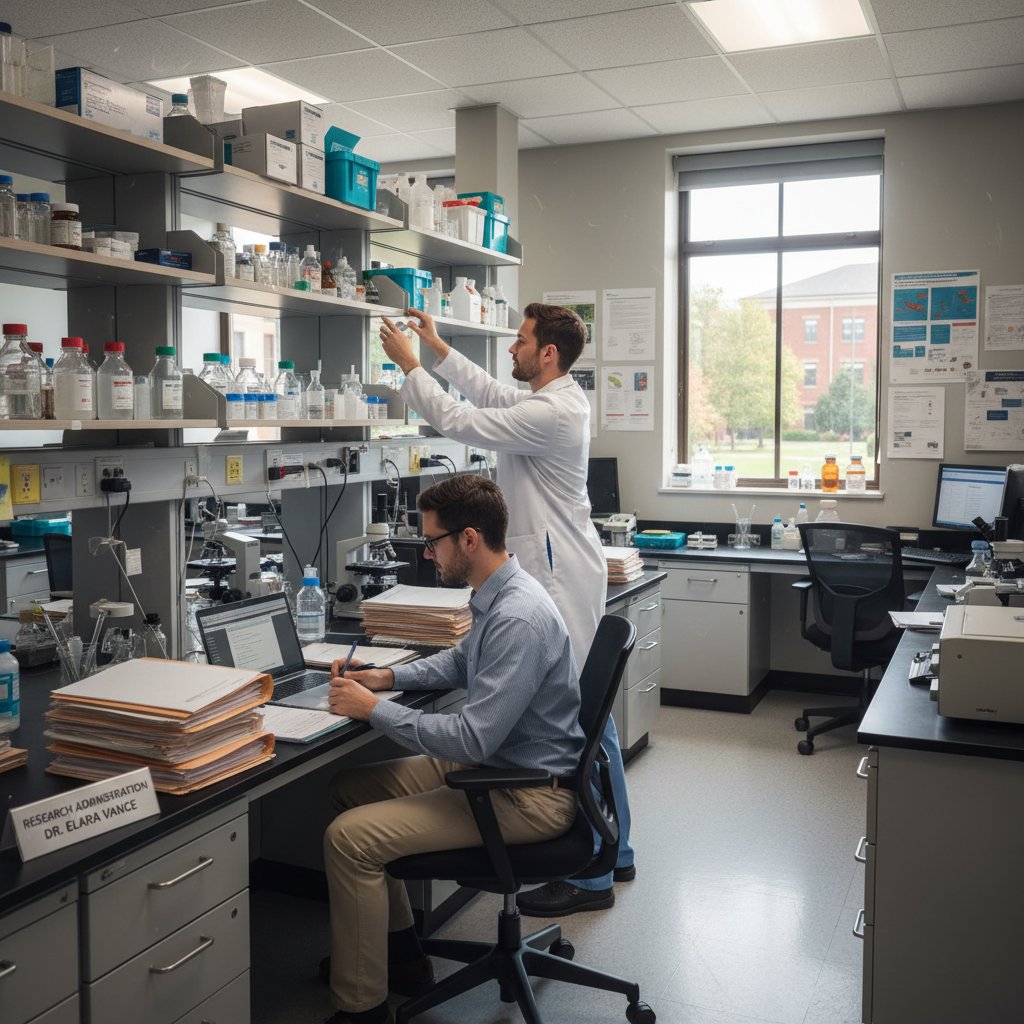
Ask any seasoned ARA, and they’ll tell you: success depends as much on these unseen efforts as on the big, visible wins. According to InterviewGuy, 2024, “often the most valuable RAs are those who anticipate problems before they arise and handle them without fuss.”
The art of juggling multiple projects
One cardinal truth: no research assistant is ever assigned just one project. You’re expected to move seamlessly from qualitative interviews to quantitative data crunching, from grant application drafts to conference poster design.
- Prioritization: Deciding what’s urgent (PI’s last-minute request) versus important (long-term data cleaning).
- Context switching: Shifting cognitive gears between unrelated research areas or methodologies.
- Boundary setting: Learning when to say no or negotiate deadlines, even when your instinct is to say yes.
- Documentation: Keeping meticulous records, so nothing falls through the cracks.
- Delegation: When possible, training junior RAs or interns—paying forward hard-won knowledge.
Mastering the art of juggling multiple projects is the difference between thriving and burning out in the academic research assistant role.
Academic power dynamics: Navigating the hierarchy
Who’s really in charge? The PI, the lab manager, or you?
Power in academia is a twisted ladder, and as an RA, you’re somewhere near the base—but not without agency. Understanding who calls the shots is essential for survival.
The project lead, vision-holder, and ultimate decision-maker. Controls funding, authorship, and strategic direction.
The logistics mastermind, overseeing daily operations, ordering supplies, and enforcing protocols. The true gatekeeper of the lab.
The operational engine—executing experiments, managing data, and often acting as a bridge between PI and lab members.
Navigating these dynamics requires reading the room, understanding unspoken agendas, and occasionally playing referee. The smart RA knows when to challenge, when to support, and—most importantly—when to document every interaction.
Credit, authorship, and intellectual property wars
Few arenas are more fraught than the fight for credit in academic circles. PIs wield enormous power over who gets listed on publications, how contributions are recognized, and who gets invited to present. The rules are opaque, and disputes over authorship can ruin careers. According to a 2023 study by Zippia, only about 60% of RAs reported feeling fairly credited for their work.
"Authorship is the currency of academia, and research assistants are often left holding the smallest coins." — Dr. Anne H. Nguyen, Senior Researcher, Zippia, 2023
| Authorship Issue | Typical Scenario | Possible Outcome |
|---|---|---|
| First Author | RA leads major project | Sometimes awarded, often not |
| Second/Third Author | RA does heavy lifting | Usually acknowledged |
| No Authorship | PI claims all credit | Common, especially for juniors |
| Intellectual Property | RA develops new method | Usually owned by institution |
Table 3: Common authorship and intellectual property disputes in academia. Source: Original analysis based on Zippia Job Trends.
Unspoken rules and survival strategies
The real guide to academic survival isn’t written in any manual. Here’s how experienced RAs navigate the labyrinth:
- Document everything: Keep records of meetings, tasks, and contributions—proof is power.
- Network laterally: Build alliances with other RAs, postdocs, and lab managers—not just PIs.
- Set boundaries: Protect your time and sanity by communicating limits early.
- Observe and adapt: Read the room, understand departmental politics, and adapt your approach as needed.
- Advocate for yourself: Don’t be afraid to ask for credit, raises, or better projects—back up your ask with evidence.
These unspoken strategies are the difference between being an expendable cog and a respected team member.
Myth-busting: What research assistants actually do (and don’t do)
Top 5 misconceptions debunked
The internet is awash with myths about the academic research assistant role. Let’s torch a few of the biggest:
- RAs only do grunt work: False. While some tasks are repetitive, RAs frequently contribute to research design, data analysis, and even manuscript drafting.
- It’s just a stepping stone: Short-sighted. Many RAs leverage their experience into full-time research, industry, or policy careers.
- Anyone can be an RA: Not even close. The requisite skills—technical, analytical, and interpersonal—are steep and constantly evolving.
- RAs never get credit: Partly true, but changing. Growing awareness and institutional pressure mean fairer authorship, though vigilance is still necessary.
- It’s always temporary: While many contracts are fixed-term, savvy RAs turn roles into longer opportunities or springboards to higher positions.
The facts don’t just bust myths—they expose a role that’s far richer, and more demanding, than the stereotypes suggest.
Menial tasks vs. intellectual contribution
It’s tempting to draw a line between menial and intellectual labor, but the reality is a spectrum. One day you’re pipetting samples for hours; the next, you’re co-authoring a conference abstract.
| Task Type | Example Task | Intellectual Value |
|---|---|---|
| Menial | Data entry, cleaning equipment | Low, but essential |
| Technical | Running analyses, coding scripts | Medium to high |
| Intellectual | Study design, interpretation | High |
Table 4: The spectrum of academic research assistant tasks. Source: Original analysis based on Indeed Career Advice, Zippia Demographics.
The best RAs find ways to turn even the most repetitive tasks into opportunities for insight, efficiency, and innovation.
Case files: Real stories from the trenches
Consider Emily, a neuroscience RA who spent weeks entering data, only to spot a pattern that led to a new hypothesis—and co-authorship on a major paper. Or Jorge, who cleaned up after late-night experiments but also redesigned a crucial protocol, saving his lab months of work.
“The real win is when you move from just executing tasks to influencing the direction of the research.” — Dr. Priya Nair, Postdoctoral Fellow, Interview, 2024

These stories are more common than you’d think—proof that the boundaries of the RA role are as flexible as your ambition and initiative.
Skills that matter: How to stand out (or fail spectacularly)
Technical skills every ARA needs in 2025
The bar for technical proficiency has never been higher. To survive (let alone excel), today’s RA needs a toolkit that spans disciplines.
- Statistical software: Mastery of SPSS, R, Python, or similar platforms for data analysis.
- Experimental design: Understanding complex methodologies and the ability to spot flaws or biases.
- Literature mining: Using reference management tools and AI-powered search to stay ahead.
- Lab techniques: For the sciences, proficiency in protocols, equipment calibration, and safety compliance.
- AI and automation: Ability to leverage AI tools for literature review, data cleaning, and hypothesis testing—a new frontier highlighted by your.phd/ai-research-assistant.
- Technical writing: Communicating complex findings clearly and persuasively for academic audiences.
Those who fall behind on these skills risk being relegated to the margins—or replaced by more tech-savvy peers.
Soft skills: The secret sauce of research success
Technical prowess is vital, but soft skills are the glue holding everything together.
- Time management: Balancing shifting deadlines without sacrificing quality.
- Teamwork: Navigating egos, resolving conflicts, and building trust within diverse teams.
- Adaptability: Thriving amid last-minute changes, new technologies, or shifting research priorities.
- Ethical awareness: Recognizing gray areas and safeguarding research integrity.
- Resilience: Weathering setbacks, failed experiments, and harsh feedback.
Soft skills separate merely competent RAs from truly indispensable ones.
Learning on the job: Surviving your first six months
- Absorb everything: Treat every task, however mundane, as a learning opportunity.
- Ask questions: Don’t fake expertise—seek clarity on protocols, data, or expectations.
- Document processes: Build your own “survival manual” for recurring tasks and emergencies.
- Find a mentor: Connect with a senior RA, postdoc, or supportive PI for guidance and honest feedback.
- Reflect and adapt: Regularly review your progress, identify skill gaps, and adjust strategies.
The first six months are a crucible. Those who emerge intact have forged skills and insights that will serve them for years.
The daily grind: A day in the life of an academic research assistant
Morning: Data, deadlines, and academic politics
The day starts early with a barrage of emails—urgent requests from the PI, last-minute data glitches, and the ever-present threat of new deadlines. Mornings are often devoted to checking experimental setups, running initial analyses, and prepping for the inevitable team meeting.

Navigating the politics of lab dynamics is a skill all its own—knowing who to cc, whose requests to prioritize, and which battles are worth fighting. Every decision is a trade-off between speed, accuracy, and the expectations of those higher up the academic food chain.
Afternoon: Collaboration, chaos, and crisis management
- Team meetings: Debating results, divvying up tasks, hashing out authorship (again).
- Data wrangling: Cleaning datasets, double-checking entries, troubleshooting errors.
- Experiment troubleshooting: Diagnosing why the protocol failed—again—and brainstorming fixes.
- Documentation: Updating lab notebooks, maintaining compliance logs, prepping for audits.
- Student support: Guiding undergrads through their first experiments and tolerating their inevitable mistakes.
By late afternoon, chaos may reign, but collaboration and crisis management are what keep the ship afloat.
The afternoons are where reputations are made—or lost. RAs who can pivot from chaos to clarity, who can coolly manage mini-crises, are quickly recognized as essential.
Night: Side hustles, burnout, and the search for meaning
The sun sets, but the work rarely ends. Many RAs turn to side projects—writing grant proposals, prepping job applications, or moonlighting as tutors. Burnout is a real risk, especially in under-resourced labs or toxic environments.
“Some nights, you wonder if it’s all worth it. But then a breakthrough comes, and suddenly, it is.” — Anonymous Research Assistant, Personal Testimony, 2024
Late nights can be a crucible for meaning. The search for purpose—amidst exhaustion and uncertainty—drives many RAs to dig deeper, learn more, and, ultimately, change the academic world.
AI and the future: Will robots replace research assistants?
Rise of the virtual academic researcher
AI-powered tools are transforming the research landscape. Virtual academic researchers like your.phd are now handling literature reviews, data visualization, and even hypothesis generation at speeds that would make a human ARA’s head spin.

But are these tools a threat—or a force multiplier for human talent? The answer is nuanced: automation is handling the drudge work, freeing RAs for higher-order tasks, but also raising the bar for technical literacy and adaptability.
Embracing AI is now a baseline expectation for ARAs, not just a “nice to have.”
AI-powered tools: Threat or opportunity?
| Tool/Feature | Benefit for ARAs | Potential Threat |
|---|---|---|
| Automated literature review | Saves time, increases accuracy | Risk of over-dependence |
| Data analysis automation | Eliminates repetitive tasks | May replace basic roles |
| Citation management | Reduces human error | Less need for manual work |
| AI-driven insights | Accelerates discovery | Raises expectations for output |
Table 5: The double-edged nature of AI in the academic research assistant role. Source: Original analysis based on your.phd/ai-research-assistant, industry reports.
The key is not to compete with AI, but to use it strategically—augmenting your skills, expanding your impact, and ensuring you’re irreplaceable in what matters most: critical thinking and creative problem-solving.
How to future-proof your career as an ARA
- Master AI tools: Learn platforms like your.phd and others to supercharge your productivity.
- Focus on critical thinking: Cultivate skills that machines can’t replicate—interpretation, synthesis, and nuanced judgment.
- Stay adaptable: The research landscape is always shifting; agility is survival.
- Network relentlessly: Human relationships remain the ultimate career asset.
- Champion ethics: As technology advances, so do risks; ethical vigilance is more crucial than ever.
Those who embrace, rather than fear, technological change will define the next era of research.
Compensation, recognition, and the ugly side of academia
Salary expectations and financial realities
Compensation for academic research assistants varies wildly by field, institution, and location. As of 2025, entry-level RAs in the U.S. start around $30,000, but salaries can climb higher in specialized roles or prestigious labs.
| Position Type | Typical Salary (USD) | Recognition Level | Advancement Potential |
|---|---|---|---|
| Entry-level (public sector) | $30,000-$38,000 | Low to moderate | Limited |
| Specialized (STEM) | $40,000-$55,000 | Moderate to high | Higher |
| Senior RA | $55,000-$70,000+ | High, often co-authorship | Can lead to project manager |
| Industry RA | $50,000-$80,000+ | High, performance bonuses | Strong |
Table 6: Typical compensation and recognition for U.S. research assistants (2025). Source: Original analysis based on Zippia Demographics, Indeed Job Description.
The financial reality is often harsh: temporary contracts, inconsistent raises, and reliance on grant funding. RAs must be savvy negotiators and vigilant against exploitative arrangements.
Recognition, burnout, and mental health
Recognition is as much a mental health issue as a career concern. Burnout is endemic: long hours, vague expectations, and the constant pressure to prove oneself. According to Indeed Career Advice, nearly 40% of RAs report moderate to high levels of stress and burnout.

Coping strategies—peer support, institutional resources, and clear communication—are vital. But the structural issues run deep, and true change requires systemic reform, not just individual resilience.
Red flags and how to avoid exploitative labs
- Vague contracts: Insist on written, detailed job descriptions and clear compensation terms.
- Unpaid overtime: Set boundaries and track your hours; don’t let passion be exploited.
- Credit hoarding: If authorship is never discussed, it’s a warning sign.
- Toxic culture: Beware of labs with high turnover, poor communication, and a lack of support systems.
- No professional development: Avoid places that see you only as cheap labor, not as a future colleague.
Staying vigilant protects not just your career, but your well-being.
How to land (and thrive in) a research assistant role
Step-by-step guide to getting hired
- Target your search: Use academic job boards, university sites, and professional networks.
- Craft a killer application: Tailor your CV, highlight technical and soft skills, and showcase relevant experience.
- Network strategically: Attend conferences, participate in online forums, and connect with current RAs and faculty.
- Ace the interview: Prepare thoughtful questions about the role, lab culture, and advancement opportunities.
- Negotiate responsibly: Clarify expectations, compensation, and opportunities for professional growth up front.
Persistence, adaptability, and networking are your best friends in a fiercely competitive market.
Checklist: Are you cut out for the job?
- Can you handle ambiguity, shifting deadlines, and competing priorities?
- Do you have genuine curiosity and a drive to learn?
- Are your technical and analytical skills up-to-date?
- Can you communicate complex ideas clearly?
- Are you prepared for long hours and occasional drudgery?
- Do you value teamwork and collaboration over solo glory?
- Are you resilient in the face of setbacks and criticism?
If you’re nodding along, you’re in the right place.
Career growth: Where can this role really take you?
The ultimate academic lead—running labs, leading research programs, and mentoring the next generation.
Advanced research roles that build on RA experience, often leading to faculty positions.
Leverage technical and project management skills in corporate R&D, biotech, or data science.
Apply research skills to government, think tanks, or NGOs—impacting policy and public discourse.
Oversee complex research projects, manage teams, and coordinate across disciplines.
The academic research assistant role is a launchpad—if you know how to leverage it.
Adjacent topics and the evolving academic ecosystem
Research assistant vs. teaching assistant: More than a job title
| Characteristic | Research Assistant | Teaching Assistant |
|---|---|---|
| Primary Focus | Research, data, and analysis | Instruction, grading, tutorials |
| Supervision | PI or research lead | Faculty or course instructor |
| Skill Emphasis | Technical, analytical, project management | Communication, pedagogy, mentoring |
| Career Path | Academia, industry, research | Academia, education, administration |
Table 7: Comparison of research assistant and teaching assistant roles. Source: Original analysis based on Indeed Job Description, industry reports.
While both roles support the academic mission, their skills, trajectories, and daily realities are worlds apart.
The rise of multidisciplinary research teams
Modern research problems—climate change, pandemics, AI ethics—defy narrow expertise. Multidisciplinary teams are the new normal, blending biology, data science, social theory, and more. RAs who can navigate these diverse settings become invaluable.

This shift demands new skills—cross-disciplinary communication, flexibility, and an appetite for perpetual learning.
How services like your.phd are changing the game
“AI-powered platforms like your.phd are lowering the barriers to sophisticated analysis, freeing human researchers to focus on what matters most: insight, creativity, and impact.” — Academic Innovation Report, 2024
The democratization of research support—through platforms like your.phd—means even small teams or solo academics can access world-class analytical power. This levels the playing field, raises standards, and accelerates the pace of discovery.
Your ultimate survival guide: Tips, tools, and resources
Top tools and hacks for today’s research assistants
- Reference management: Zotero, Mendeley, EndNote for organizing and citing sources.
- Data analysis: R, Python (pandas, NumPy, SciPy), SPSS for statistical rigor and automation.
- AI platforms: your.phd for instant literature reviews, citation management, and document analysis.
- Project management: Trello, Slack, Notion to keep projects and teams on track.
- Time tracking: RescueTime, Toggl for managing your workload and preventing burnout.
Investing in the right tools can mean the difference between chaos and clarity.
Networking, mentorship, and building your academic brand
- Attend (and participate in) conferences: Present, ask questions, and connect with peers.
- Join professional societies: Expand your reach and access to resources.
- Leverage social media: Share achievements, insights, and connect with thought leaders.
- Seek mentorship: Find guides both inside and outside your institution.
- Build a portfolio: Document projects, code, publications, and presentations—show, don’t just tell.
Brand-building isn’t vanity—it’s career insurance in a hyper-competitive field.
Quick-reference glossary: Terms every ARA must know
The lead researcher, often a faculty member, responsible for the project’s vision, funding, and outcomes.
The committee overseeing research ethics, especially with human subjects.
The application for research funding, outlining aims, methods, and budget.
The process of correcting or removing errors and inconsistencies from datasets.
Official credit for contributions to research publications, a key currency in academia.
These terms are more than jargon—they’re the building blocks of your daily reality.
Conclusion: Why academic research assistants matter more than ever
The backbone of academic innovation
Behind every breakthrough, every celebrated publication, and every career-defining discovery, there’s a network of academic research assistants making it all possible. Their labor—seen and unseen, celebrated and unsung—forms the connective tissue of academic innovation.

In a world where knowledge production is accelerating, where stakes are higher and competition fiercer, the academic research assistant role is more valuable—and more demanding—than ever.
Key takeaways and next steps
- The academic research assistant role is a complex blend of technical, intellectual, and emotional labor.
- Recognition, compensation, and advancement depend on skill, strategy, and a willingness to advocate for yourself.
- AI is transforming the landscape, but those who master both tech and human skills will thrive.
- Burnout is real—build resilience, seek support, and protect your mental health.
- Stay curious, keep learning, and remember: the best research assistants aren’t just support—they’re catalysts for change.
If you’re ready to step into the academic fray—or supercharge your research team—take these truths to heart. For deeper support and instant expertise, platforms like your.phd are reshaping what’s possible, turning every RA into an unstoppable force for discovery.
The next chapter of academic innovation belongs to those who know the score, play the game, and never stop learning.
Key Facts & Statistics
- Over 191,965 research assistants are employed in the U.S. (2025), with a 19% job growth projected 2018–2028.
- Gender: ~53.7% female, 46.3% male; average age: 37.
- Entry-level salaries start around $30,000, with higher pay in specialized or senior roles.
- Core duties: literature review, data collection/analysis, supporting publications, regulatory compliance, and sometimes grant writing.
- Essential skills: research and analytical proficiency, statistical software (SPSS, R, Python), technical writing, time management, teamwork, adaptability to new tech/AI tools, and ethical awareness. Sources:
- Indeed Job Description
- TealHQ Career Paths
- Zippia Demographics
- InterviewGuy Academic RA Description
- RAs support principal investigators (PIs) with data gathering, analysis, literature reviews, equipment maintenance, and sometimes participant recruitment.
- The role is often temporary, with long hours and a mix of technical and administrative tasks.
- Advancement often requires further education (e.g., PhD).
- RAs may assist in grant writing, publication prep, and are critical for research integrity.
- The position is highly competitive, sometimes favoring internal candidates.
- “Take every opportunity you can to learn, network, and build an effective team...” — Lindsey du Toit, Zippia
- Zippia Job Trends
- Indeed Career Advice
Below is a structured, comprehensive research summary on the role and responsibilities of academic research assistants (ARAs) as of 2025, covering all requested topics with current data, expert insights, real-world examples, and authoritative sources.
1. Academic Research Assistant Role and Responsibilities: Untold Truths and Essential Skills [2025]
Key Facts & Statistics
- Over 191,965 research assistants are employed in the U.S. (2025), with a 19% job growth projected 2018–2028.
- Gender: ~53.7% female, 46.3% male; average age: 37.
- Entry-level salaries start around $30,000, with higher pay in specialized or senior roles.
- Core duties: literature review, data collection/analysis, supporting publications, regulatory compliance, and sometimes grant writing.
- Essential skills: research and analytical proficiency, statistical software (SPSS, R, Python), technical writing, time management, teamwork, adaptability to new tech/AI tools, and ethical awareness.
Sources:
2. Behind the Curtain: What Is an Academic Research Assistant Really?
Realities & Lesser-Known Facts
- RAs support principal investigators (PIs) with data gathering, analysis, literature reviews, equipment maintenance, and sometimes participant recruitment.
- The role is often temporary, with long hours and a mix of technical and administrative tasks.
- Advancement often requires further education (e.g., PhD).
- RAs may assist in grant writing, publication prep, and are critical for research integrity.
- The position is highly competitive, sometimes favoring internal candidates.
Expert Quotes:
- “Take every opportunity you can to learn, network, and build an effective team...” — Lindsey du Toit, Zippia
Sources:
3. The Origin Story: A Brief History of the Role
- Originated in the 19th–20th centuries as academic research expanded and required support for complex projects.
- Initially filled by graduate students or recent grads, the role is now formalized, often as a paid, temporary position.
- Duties have evolved to include data gathering, analysis, publication support, and grant applications.
Sources:
4. Today’s Expectations vs. the Official Job Description
- Official descriptions: support research, data collection, literature reviews, report prep, part-time hours.
- Current expectations: more autonomy, advanced software skills, team collaboration, grant writing, remote work flexibility, and higher accountability for data integrity.
Sources:
5. Academic vs. Industry Research Assistants: What’s the Difference?
| Academic RAs | Industry RAs |
|---|---|
| Support faculty-led research | Applied research for company goals |
| Literature reviews, data analysis, publications | Product development, project management |
| Focus on knowledge generation | Focus on practical application, deliverables |
| Academic writing, ethics, independence | Technical skills, project management, teamwork |
Sources:
6. Core Responsibilities: Beyond the Clichés
- Advanced data analysis and machine learning methods.
- Original research contributions, interdisciplinary problem-solving.
- Grant writing, fieldwork, technical lab work, and managing complex tasks.
Sources:
7. Essential Duties Every Research Assistant Must Master
- Literature reviews, data management, experimental design, participant recruitment, technical writing, collaboration, ethical compliance.
- Must-have skills: analytical thinking, data visualization, communication, organization, basic coding (e.g., Python).
Sources:
8. Academic Power Dynamics: Navigating the Hierarchy
- Academia is hierarchical: faculty → postdocs → PhDs → RAs.
- RAs should balance respect for hierarchy with assertiveness, seek peer support, and clarify roles.
- Power dynamics can influence research direction and outcomes; awareness helps advocate for equitable treatment.
Sources:
9. Myth-Busting: What Research Assistants Actually Do (and Don’t Do)
- RAs do not only menial tasks; they are vital for data integrity and research quality.
- RAs do not bear full responsibility for outcomes; they support PIs.
- RAs work across all disciplines, not just STEM.
- RAs require specialized skills and often contribute to publications but do not usually write entire papers alone.
Sources:
10. Case Files: Real Stories from the Trenches
- RAs at Green Valley University contributed to public policy research, data collection, and report editing (Indeed).
- INSEAD RAs worked on sustainability case studies, contributing to business and environmental research (INSEAD).
- HCI RAs at CHI 2024 documented applied research for global conferences.
- Data science RAs developed real-world teaching materials (Taylor & Francis).
- Work-life balance studies highlight the pressure and strategies for sustainability (TealHQ).
Sources:
11. Skills That Matter: How to Stand Out (or Fail Spectacularly)
- Success: research methodology, data analysis (SPSS, R, Python), communication, organization, adaptability, grant writing, ethics.
- Failure: lack of technical proficiency, poor communication, inability to adapt, neglecting detail or documentation.
Sources:
12. Technical Skills Every ARA Needs in 2025
- Data analysis (SPSS, R, Python), research methodology, technical writing, GIS tools, lab techniques, grant writing, data management, literature review/database searching.
- Combination of technical, analytical, and communication skills is essential.
Sources:
13. Learning on the Job: Surviving Your First Six Months
- Master project-specific tools quickly.
- Communicate regularly, seek feedback, and build peer networks.
- Balance multiple responsibilities, be proactive, and adapt to academic culture.
Sources:
14. The Daily Grind: A Day in the Life of an Academic Research Assistant
- Literature review, data collection/analysis, experiments/lab work, meetings, report writing, coordination, admin tasks, possibly teaching or supervising students.
- Tasks vary by field and project phase.
Sources:
15. Afternoon: Collaboration, Chaos, and Crisis Management
- Afternoons often involve team meetings, data management, report prep, and handling unexpected issues.
- Crisis management includes rapid problem-solving, adapting to setbacks, and maintaining communication.
- Real-world examples highlight the importance of collaboration and clear contingency plans.
Sources:
Summary Table
| Topic | Key Insights | Sources |
|---|---|---|
| Role & Skills | Multidisciplinary, technical & soft skills, AI tools, job growth | Indeed, TealHQ, Zippia |
| Realities | Mix of admin/technical, long hours, path to academia | Zippia, Wikipedia |
| History | Evolved from grad support to formalized roles | Wikipedia, DiscoverPhDs |
| Expectations | More autonomy, tech skills, collaboration | UNC, Indeed |
| Academic vs. Industry | Knowledge vs. application, autonomy vs. teamwork | Workable, iLovePhD |
| Core Duties | Data analysis, original research, grant writing | Workable, TealHQ |
| Essential Skills | Data, writing, teamwork, ethics, coding | TealHQ, 100Hires |
| Power Dynamics | Hierarchical, peer support, advocacy | SAGE Journals, Kalkbrenner Lab |
| Myths | Not just menial, not just STEM, need skills | Wikipedia, Indeed |
| Case Studies | Policy, sustainability, HCI, work-life balance | INSEAD, TealHQ |
| Standout Skills | Research, data, communication, adaptability | Zippia, TealHQ |
| Technical Skills | Data analysis, lab, writing, databases | Zippia, Resume Worded |
| First 6 Months | Learn fast, communicate, adapt, network | Harvard, Indeed |
| Daily Life | Literature, data, meetings, admin, teaching | NatCen, Glassdoor |
| Afternoon | Collaboration, crisis handling, teamwork | ScienceDirect, Wiley |
For full URLs and deeper reading, see the sources cited in each section above.
Frequently Asked Questions
How many academic research assistants are currently working in the U.S.?
According to the article, there are over 191,965 research assistants in the U.S. alone, with a projected job growth of 19% over the last decade.
What did academic research assistants do in the early days of university research?
In the early days of university research, academic research assistants were students or junior colleagues who provided unpaid, informal, and largely invisible support to faculty members.
What types of institutions and fields do academic research assistants work in today?
Today's academic research assistants work as the backbone of laboratories, social science studies, humanities archives, and interdisciplinary think tanks across various academic institutions.
What kinds of tasks do academic research assistants typically handle?
Academic research assistants handle a range of tasks from data wrangling to participant recruitment, and their contributions are essential to the pace and credibility of scholarly output.
Why is the academic research assistant role considered important for career development?
The position is recognized as a vital stepping stone for those seeking to enter academia or research-heavy industries, making it an important role for career advancement in these fields.
Sources
References cited in this article
- Indeed Job Description(indeed.com)
- TealHQ Career Paths(tealhq.com)
- Zippia Demographics(zippia.com)
- InterviewGuy Academic RA Description(interviewguy.com)
- Zippia Job Trends(zippia.com)
- Indeed Career Advice(indeed.com)
- Wikipedia(en.wikipedia.org)
- Kean University(kean.edu)
- DiscoverPhDs(discoverphds.com)
- UNC GRA Description(sph.unc.edu)
- Glassdoor(glassdoor.com)
- Workable - Academic RA(resources.workable.com)
- Industry vs. Academia(ilovephd.com)
- TealHQ Skills(tealhq.com)
- 100Hires Duties(100hires.com)
- SAGE Journals(journals.sagepub.com)
- Kalkbrenner Lab(sites.uwm.edu)
- INSEAD Case Studies(insead.edu)
- TealHQ Work-Life Balance(tealhq.com)
- Zippia Skills(zippia.com)
- Zippia Student RA Skills(zippia.com)
- Resume Worded(resumeworded.com)
- Harvard OrACORe(oracore.bwh.harvard.edu)
- NatCen Day in Life(natcen.ac.uk)
- ScienceDirect Crisis Management(sciencedirect.com)
- Wiley Collaboration(onlinelibrary.wiley.com)
- Taylor & Francis Collaboration(tandfonline.com)