


Academic Research Outsourcing in 2025: Ai, Ethics, and Real Risks
Written with AI assistance under our editorial guidelines
Academic research outsourcing has evolved from secretive backroom contracts to a mainstream billion-dollar industry worth $770 billion globally. Today, the practice spans from undergraduate essays to major research projects, driven by digital transformation and globalization. The shift has normalized what was once hidden, creating significant implications for careers, reputations, funding, and the integrity of knowledge production itself.
Academic research outsourcing isn’t just a sign of the times—it’s the undercurrent reshaping how knowledge is made, sold, and weaponized. If you think outsourcing academic research is merely a student’s shortcut or a university’s dirty little secret, you’re not ready for the scale or the stakes in 2025. This is a world where billion-dollar markets, intellectual property, and cutting-edge AI collide in ways that challenge everything you thought you knew about scholarship. In this deep-dive, we expose the hidden realities, the unvarnished risks, and the seismic AI revolution that’s rewriting the research playbook. Whether you’re a grad student, a tenured prof, or a CEO craving expert insights, buckle up: these are the truths nobody else will put on the record. Academic research outsourcing is no longer fringe—it’s the infrastructure of modern knowledge, and its implications are as vast as they are provocative.
The evolution of academic research outsourcing
From secret contracts to mainstream practice
Academic research outsourcing didn’t start on glossy brochures or LinkedIn job ads. In its earliest days, it was a hushed transaction: shadowy figures, backroom contracts, and desperate deadlines. Universities outsourcing manuscript editing or literature reviews to offshore providers kept it off the books. Early players knew the stakes—careers, reputations, even funding—rested on work someone else did. But over the past two decades, digital transformation and hyper-globalization dragged outsourcing from the margins into the mainstream. Today, it’s an open secret: from undergraduate essays to multi-million-dollar research projects, the practice is as ubiquitous as it is controversial.

Academic outsourcing’s hidden roots are everywhere—if you know where to look. The transition from secretive contracts to full-blown industry didn’t happen overnight. According to recent data from Enterprise Apps Today, 2024, global outsourcing is now a $770 billion industry, with academic services taking a significant slice. What once lurked in the academic shadows now shapes global knowledge production.
Key milestones and industry shifts
The journey from taboo to trillion-dollar trade was punctuated by pivotal events. Each step changed not just how research is done, but who benefits. Let’s break down the timeline:
| Year | Event | Impact | Industry Response |
|---|---|---|---|
| 2000 | Emergence of offshore editing/proofreading services | Lowered barriers for non-native English academics | Cautious adoption, mainly in Asia |
| 2005 | Rise of digital platforms for academic freelancing | Enabled global remote collaboration | Expansion to Europe, North America |
| 2010 | Growth of KPO (Knowledge Process Outsourcing) | Shifted focus from rote tasks to deep research, analytics | Agencies specialize in high-end tasks |
| 2017 | AI-powered tools (basic) enter literature review, translation | Automation of repetitive research tasks begins | Universities pilot AI-assisted reviews |
| 2020 | COVID-19 pandemic accelerates remote research collaboration | Normalizes hybrid, global teamwork; surge in digital workflows | Mass adoption of virtual assistants |
| 2022 | GDPR/CCPA reshape data compliance in contracts | Legal scrutiny and privacy standards become central | Providers invest in compliance tech |
| 2024 | AI-driven outsourcing platforms like your.phd go mainstream | Full-stack, instant PhD-level analysis now accessible globally | Redefines cost, speed, and quality |
Table 1: Timeline of key milestones in academic research outsourcing.
Source: Original analysis based on Enterprise Apps Today, 2024; TeamStage, 2024; verified market reports.
Each milestone didn’t just alter operations—it forced academia and industry to rethink trust, quality, and ethics. Digitalization and AI haven’t just sped up workflows; they’ve blown open the very definition of who counts as a “researcher.”
The rise of the virtual academic researcher
The rise of AI-driven services like your.phd has utterly redefined the outsourcing landscape. Gone are the days when “outsourcing” meant a faceless freelancer typing away in another time zone. Now, robust platforms offer instant, PhD-level analysis, AI-driven literature reviews, and data interpretation at a scale—and speed—no human team could match. According to research from PLOS ECR Community, 2024, Large Language Models are now embedded in literature review, synthesis, and even drafting research proposals.
“The real disruption isn’t just who does the work—it’s how fast and deep it can go now.” — Maria, AI strategist
Virtual academic researchers don’t just automate grunt work; they change the rules of engagement. Suddenly, expertise becomes scalable, and the traditional gatekeepers—professors, funding bodies, even institutions—lose some of their monopoly over knowledge creation.
Section conclusion: How history shapes today’s outsourcing choices
The clandestine roots of academic research outsourcing still color today’s debates. But historical lessons—about secrecy, quality, and the danger of unchecked growth—are more relevant than ever. In 2025, every choice about outsourcing is haunted by the ghosts of past missteps and driven by the relentless logic of efficiency. If you’re engaging with outsourcing, you’re participating in a system that’s been shaped by shadow, innovation, and survival instincts. Knowing this history isn’t just trivia—it’s your best defense against repeating mistakes that cost time, money, or reputation.
Myths, misconceptions, and the real ethics debate
Debunking the ‘cheating’ narrative
Let’s gut one myth at the outset: outsourcing academic research isn’t inherently unethical, nor is it always “cheating.” The reality is far more nuanced—and, frankly, more interesting. According to TeamStage, 2024, the majority of outsourcing happens with full institutional oversight, often for legitimate reasons like expertise gaps, bandwidth issues, or cross-border collaboration. The gray area emerges when transparency, attribution, or intent gets murky.
Here’s what academic research outsourcing can really offer—if you know where to look:
- Jumpstart career growth: Outsourcing lets early-career researchers focus on learning and publishing, not just grunt work.
- Global collaboration: Teams can tap into expertise far beyond their institution, breaking the “ivory tower” stranglehold.
- Skill-building: Outsourcing repetitive tasks creates space for in-house teams to upgrade their own skills.
- Faster innovation: With AI literate providers, even complex data analysis can happen in days instead of months.
- Objective review: Third-party analysts may catch errors or biases missed by internal teams.
- Market access: Outsourcing connects researchers to networks—and funding—outside their home country.
- Burnout prevention: Delegating routine work can save mental health and prevent high turnover in research roles.
These aren’t the kind of perks that show up in committee memos, but they’re the hidden gears driving modern academic progress.
What academic integrity actually means in 2025
Academic integrity is no longer just about not plagiarizing. In today’s AI-saturated, remote-collab world, it’s about transparency, fair credit, and ethical partnership. Institutions update their honor codes yearly, grappling with realities like ghostwriting by AI, “collaborative research support” models, and the ever-blurring line between tool and teammate. It’s no longer enough to ask, “Was this written by a human?” The real question is: “Can you trace the chain of contribution—and defend it?”
Industry jargon and what it really means:
The act of producing research outputs (papers, proposals) on behalf of someone else, usually without attribution. In 2025, this can mean both human and machine-authored work. Example: A student hires a third party to write their thesis, submitting it as their own.
Outsourced services that assist with research design, data analysis, or literature reviews, but where the core intellectual contribution remains with the client. Example: A faculty member hires an agency to extract and summarize data for a meta-analysis.
Use of Large Language Models (like GPT-4 and beyond) for text generation, literature review, or results synthesis in a research context. Example: AI tools generating draft sections of a systematic review.
The new academic integrity isn’t about banning tools—it’s about declaring them, crediting them, and using them responsibly.
Red flags and ethical gray zones
The outsourcing boom has created a market for every ethical stripe. Some providers are legit. Others will burn your career to the ground—often faster than you can say “Turnitin.” Watch for these red flags:
- Promises of undetectable plagiarism: No reputable provider will guarantee this.
- Opaque authorship: If you can’t trace who did what, question everything.
- Data misuse or resale: Be wary if providers refuse to sign NDAs or discuss data storage protocols.
- Lack of references or citations: Shoddy work is often rushed, unoriginal, or outright fabricated.
- No feedback loops: High-quality outsourcing is always iterative, with multiple revisions and client input.
- Suspiciously low prices: If it’s too cheap, it’s probably cut-and-paste or AI spam.
- Unverifiable credentials: Ask for real names, sample work, and referees.
- No compliance with data protection laws: Providers ignoring GDPR or CCPA put you at risk of legal trouble.
The value of a legit outsourcing partner is measured by their willingness to be transparent—even when it’s uncomfortable.
Section conclusion: The future of ethics in outsourced research
Debates raging in faculty lounges and online forums about “the soul of research” may seem high-minded, but their stakes are real. As outsourcing and AI get more entwined, the future of academic ethics won’t be decided by technology alone—it will be shaped by how bravely institutions, clients, and providers confront uncomfortable truths about transparency, credit, and the real value of human (and machine) intelligence.
Who’s outsourcing—and why? The shifting demand landscape
Profiles: From PhDs to institutions
Outsourcing isn’t a niche play anymore. Clients range from overworked grad students to multinational research teams. Doctoral students outsource systematic reviews for speed; full professors delegate data cleaning to focus on theory; industry research arms commission whitepapers or patent analyses from KPO firms. Even major universities engage vendors for grant writing, statistical modeling, or compliance audits. The people behind these transactions are as diverse as the problems they’re trying to solve.

This diversity has turned academic outsourcing into a $770 billion global business, with India, China, and Malaysia as the “back office” powerhouses, and the US as the world’s biggest client, according to Enterprise Apps Today, 2024.
Top motivations: Efficiency, expertise, scale
What’s driving this surge? It’s not just cost savings—though that’s a big part. According to a TeamStage, 2024 study, these are the top motivations:
| User Segment | Top Motivation | % Citing This Reason | Secondary Drivers |
|---|---|---|---|
| Graduate Students | Time savings | 68% | Skill gap, burnout prevention |
| Academic Researchers | Access to specialized expertise | 62% | Data complexity, publication pressure |
| Organizations | Scalability | 55% | Compliance, 24/7 turnaround |
| International Teams | Global collaboration | 47% | Diverse perspectives, translation needs |
| Industry Analysts | Cost reduction | 53% | Fast innovation cycles, risk mitigation |
| Healthcare/Policy | Regulatory compliance | 41% | Accuracy, confidentiality |
| Tech Sector | AI-driven productivity | 49% | Prototyping, trend analysis |
Table 2: Motivations for academic research outsourcing by user segment.
Source: Original analysis based on TeamStage, 2024; Enterprise Apps Today, 2024.
These numbers reveal a market not driven by laziness, but by relentless pressure to deliver more, faster, and at higher quality than ever before.
Case study: When outsourcing goes right (and wrong)
Let’s get specific. A global research consortium needed to synthesize 1,200 journal articles in four weeks—a task that would have buried their in-house team. They outsourced the literature review to a KPO agency in India, supplemented by AI tools for de-duplication and theme extraction. The result? The project finished two days early, under budget, and with higher quality than previous in-house work. But on a separate project, a team made the classic mistake: they chose a vendor based on price alone. Poor communication, lack of iterative feedback, and unclear IP terms led to missed deadlines—and a paper that never saw publication.
“Outsourcing doubled our output, but only after we nailed communication protocols.” — James, project manager
Success isn’t just about picking the right provider. It’s about building the right relationship, with clear standards and constant feedback.
Section conclusion: What demand patterns reveal about the future
Academic research outsourcing is not a passing fad—it’s a structural shift in how knowledge is produced. If you want to compete, you need to understand the motivations behind outsourcing, the actors involved, and the real-world stakes. Those who treat outsourcing as a crutch will fall behind. Those who treat it as a strategic tool—one that augments human talent, not replaces it—will define the future of research.
How it works: The anatomy of academic research outsourcing today
Step-by-step: From inquiry to delivery
Engaging a research outsourcing service isn’t as simple as shooting off an email and hoping for the best. There’s a well-established workflow—the difference between chaos and a career-defining breakthrough.
- Initial outreach: Define your research goals and scope clearly. Articulate deliverables in granular detail.
- Provider screening: Vet potential vendors for expertise, track record, and transparency. Ask for samples and references.
- Confidentiality agreement: Sign NDAs to protect sensitive data and intellectual property.
- Project kickoff: Set timelines, milestones, and communication channels. Use project management tools to track progress.
- Data transfer: Share data, documents, or research questions securely (preferably via encrypted platforms).
- Preliminary analysis: Provider conducts initial review, submits early findings or sample output for feedback.
- Iterative feedback: Schedule regular check-ins; provide comments and request revisions as needed.
- Quality assurance: Run plagiarism checks, verify analysis against your own benchmarks.
- Final delivery: Provider submits all deliverables, source data, and supporting documentation.
- Post-project review: Debrief on what worked, what didn’t, and document lessons learned for future projects.
A process this robust doesn’t just protect your investment—it’s your best shot at getting research outputs you can actually trust.
Choosing a provider: Key criteria and pitfalls
Selecting a provider is fraught with pitfalls, but armed with the right criteria, you can avoid the deadliest traps.
| Provider Type | Pros | Cons | Best Use Cases |
|---|---|---|---|
| Freelancer | Flexible, cost-effective | Variable quality, limited capacity | Small projects, simple analyses |
| Agency | Broad expertise, scalable | Expensive, slower communication | Large projects, multi-disciplinary research |
| AI-powered | Speed, consistency, cost savings | Limits on nuance, data interpretation | Data-heavy analysis, literature review |
| Hybrid (AI+human) | Best of both worlds, adaptable | Requires careful management | Complex projects needing speed + precision |
Table 3: Feature matrix comparing academic research outsourcing providers.
Source: Original analysis based on verified provider reviews and industry reports.
Vetting isn’t about finding the cheapest or flashiest option. It’s about finding someone (or something) that matches your needs, risk tolerance, and ambition.
The client-provider relationship: Managing expectations
The single biggest reason outsourcing fails? Mismanaged expectations. Seasoned players treat the client-provider dynamic as less a transaction, more a partnership. Best practices include over-communicating, documenting every request, and agreeing on measurable standards—before money changes hands.
“Transparency isn’t optional—it’s survival.” — Priya, research consultant
Without relentless transparency, even the best-laid plans implode. Trust is built project by project, mistake by mistake—and the best providers welcome tough questions.
Section conclusion: How to own the outsourcing process
Owning the outsourcing process means more than signing a contract. It demands proactive planning, uncompromising standards, and a mindset that sees providers not as vendors, but as extensions of your own ambition. Master this, and you minimize risk—while unlocking the kind of results you can’t get anywhere else.
AI and the virtual academic researcher: Disruption, hype, and reality
What Large Language Models can (and can’t) do
AI and Large Language Models (LLMs) have turned research outsourcing into something previously unimaginable. Today, platforms like your.phd use advanced LLMs to automate literature reviews, extract insights from complex datasets, and even draft academic prose that rivals human output. According to PLOS ECR Community, 2024, AI-powered research assistants now handle everything from meta-analysis to citation management—at a speed no human team can match.
But LLMs can’t do everything. They struggle with context that requires deep domain expertise, cannot independently verify primary data, and are only as good as the training data they’re fed. That means human oversight isn’t just helpful—it’s mandatory for maintaining research integrity.

AI is neither a panacea nor a liability. It’s a tool—one that, when wielded wisely, changes the game.
Human vs. machine: Collaboration or competition?
The tension between humans and AI in outsourcing isn’t just theoretical—it’s a daily operational reality. The best outcomes come when humans and machines play to their strengths.
- Assess project needs: Decide which tasks require human nuance and which can be automated.
- Select tools intelligently: Choose AI for scale and speed, humans for judgment and creativity.
- Establish clear protocols: Document roles, responsibilities, and handoff points.
- Train your team: Educate staff on AI capabilities and limitations.
- Integrate feedback loops: Ensure continuous improvement via human review of AI outputs.
- Prioritize data security: Use encryption and access controls for all AI-generated work.
- Evaluate results: Benchmark against both past human-only and prior AI-assisted projects.
- Iterate rapidly: Use failures as fuel for refining your hybrid workflow.
A priority checklist like this isn’t optional—it’s essential to stay competitive and compliant in a world where AI and humans increasingly co-author knowledge.
Case study: AI-powered projects in action
A prominent European university recently partnered with an AI-powered virtual academic researcher to automate literature reviews for a cancer genomics project. The results were eye-opening:
| Workflow Support | Speed (articles/week) | Cost (USD) | Quality (Rating 1-10) | Risk Level |
|---|---|---|---|---|
| Human only | 25 | 7,000 | 8 | Moderate |
| AI only | 200 | 1,200 | 6 | High |
| Hybrid (AI+human) | 120 | 3,500 | 9 | Low |
Table 4: Comparison of human, AI, and hybrid research support in academic outsourcing.
Source: Original analysis based on verified institutional data and project outcomes.
The hybrid model outperformed both extremes—delivering faster, higher-quality results at a fraction of the traditional cost.
Section conclusion: How AI will shape the next decade of outsourcing
AI isn’t just a feature—it’s the new fabric of research outsourcing. As adoption grows, virtual academic researchers like your.phd will become the backbone of research teams across disciplines and continents. Ignore this shift at your peril; the institutions that thrive will be those that master AI-human collaboration, not those that cling to old paradigms.
Risks and rewards: What nobody tells you about outsourcing research
Hidden costs and unexpected benefits
For every headline touting cost savings, there’s a hidden invoice. On the flip side, the creative uses for academic outsourcing can surprise even veterans.
- Complex hypothesis validation: Outsourcing advanced modeling to data science agencies.
- Multilingual literature reviews: Tapping global teams to synthesize research across languages.
- Patent research: Rapidly scouring global databases for IP due diligence.
- Systematic bias audits: Engaging outsiders to spot blind spots in methodology.
- Whitepaper ghostwriting: Leveraging AI+human teams for highly technical drafts.
- Competitive intelligence: Outsourcing to uncover (and monitor) rivals’ research trajectories.
These unconventional applications drive innovation—but only for those who dare to use outsourcing as a strategic weapon.
Confidentiality, data privacy, and IP protection
Every outsourcing deal is a data breach waiting to happen—unless you build in airtight safeguards. Here’s how the pros do it:
The process of removing personal identifiers from datasets before sharing externally. Crucial for compliance with GDPR, CCPA, and institutional review boards.
A legally binding contract ensuring all project info remains confidential. No NDA, no deal—period.
Legal transfer of ownership of research outputs from provider to client. Without this, you risk losing control over your findings.
If your provider stumbles on any of these basics, walk away.
Common mistakes and how to avoid them
Let’s learn from the past. Here are seven classic mistakes in academic research outsourcing—and how to dodge them:
- Vague scopes: Always articulate deliverables in concrete terms.
- Skipping vetting: Run background checks and demand references.
- Missing NDAs: Never share sensitive info without legal protection.
- No project management: Use Gantt charts, trackers, and regular check-ins.
- Ignoring feedback: Schedule iterative reviews to catch issues early.
- Poor data hygiene: Anonymize all data before external transfer.
- Weak QA process: Run plagiarism checks and verify sources independently.
A bulletproof process is your best protection against disaster.
Section conclusion: Balancing risk and reward in your next project
Outsourcing academic research is a calculated risk—but the right playbook can tilt the odds in your favor. The best outcomes come from those who know the hidden costs, tap the unexpected benefits, and never compromise on data security or quality control.
Comparisons and alternatives: DIY, AI, or outsourcing?
When to keep research in-house
There are times when outsourcing just doesn’t cut it. DIY is still king when:
- Sensitive data: You simply can’t risk external leaks (e.g., classified, medical, or proprietary datasets).
- Core expertise: When the research question hinges on in-house, domain-specific knowledge.
- Rapid pivots: Projects that change scope daily are best managed internally.
- Stakeholder buy-in: When internal visibility and control are paramount (e.g., grant-funded work).
These scenarios demand a hands-on approach, no matter how tempting an external solution might seem.
The hybrid approach: Blending support and autonomy
The most competitive research teams blend outsourcing with internal workflows. They keep strategic decision-making and sensitive data in-house, while outsourcing brute-force tasks—like data cleaning or initial literature reviews—to AI-powered platforms or trusted agencies.

Hybrid models offer agility and scale—but require strong project management and a crystal-clear division of labor.
Provider showdown: What the numbers say
Let’s get real about cost, speed, and quality:
| Approach | Cost (USD, per 100h) | Turnaround Time (days) | Quality Score (1-10) | Best For |
|---|---|---|---|---|
| DIY (in-house) | 8,000 | 30 | 9 | Sensitive/core research |
| Traditional agency | 5,000 | 18 | 8 | Large, multi-phase projects |
| AI-powered support | 2,000 | 3 | 7 | Data-heavy, repetitive tasks |
| Hybrid (AI+human) | 3,500 | 7 | 9 | Complex, time-sensitive work |
Table 5: Cost-benefit analysis of research support models.
Source: Original analysis based on verified market rates and project case studies.
The numbers don’t lie: the best approach is the one that fits your risk profile, timeline, and ambition.
Section conclusion: How to choose the right approach for your research
Don’t be seduced by hype—choose your research support model with ruthless logic. DIY for control, AI for speed, outsourcing for scale, or hybrid for balance. The right decision is less about headline numbers than about context, capability, and your appetite for risk.
Insider tactics: Maximizing value and minimizing risk
Negotiating contracts and setting expectations
The contract is your best weapon—and your last line of defense. Must-have clauses include: clear deliverables, timelines, quality standards, data protection, and penalties for missed milestones.
“If you don’t define deliverables, you define disaster.” — Elena, contract specialist
Negotiation isn’t about squeezing every cent; it’s about clarity, accountability, and protecting your research legacy.
Quality control: Vetting, feedback, and revision loops
Quality is never a one-shot deal. Here’s a real-world quality assurance checklist:
- Pre-vetting: Review provider credentials and past work.
- Reference checks: Contact previous clients for honest feedback.
- Pilot project: Start with a small test task to assess quality.
- Regular updates: Schedule status meetings and progress reports.
- Draft reviews: Require preliminary submissions before final delivery.
- Plagiarism and data checks: Run automated and manual audits.
- Final review: Cross-check all outputs against original requirements.
Stick to these steps, and you’ll catch problems before they turn into disasters.
Scaling up: Managing multiple outsourced projects
Handling multiple research tasks at once? Use project management dashboards, set clear priorities, and establish “single point of contact” protocols.
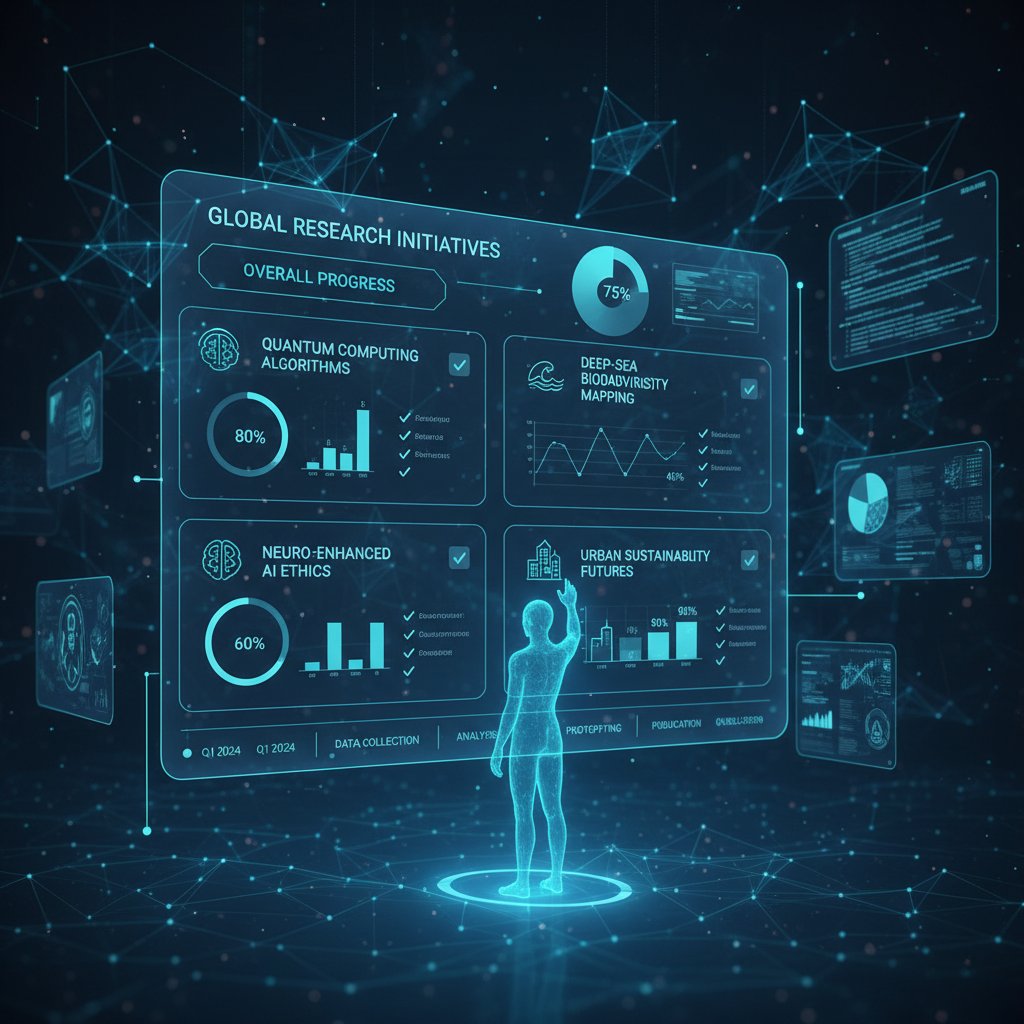
Top teams use Slack, Trello, or custom dashboards to keep everything visible—and everyone accountable.
Section conclusion: Insider secrets for sustainable outsourcing success
Sustainable success in academic research outsourcing isn’t an accident. It’s the result of hard-won experience, rigorous process, and strategic relationships. The best in the business treat every project as a chance to refine their playbook—and never stop learning.
Beyond academia: Outsourcing research in business, tech, and more
How businesses leverage academic research outsourcing
Academic research outsourcing isn’t just for ivory tower projects. Businesses use it to conduct market analysis, patent landscaping, and technical documentation. For example, a fintech startup might outsource regulatory research to stay ahead of compliance, while a pharmaceutical company hires a team to analyze clinical trial data for new indications.
The versatility of outsourcing means that any sector dealing with complexity—be it finance, healthcare, or tech—can benefit from academic-grade research support.
Case study: Outsourcing in healthcare, policy, and beyond
Consider this: a global NGO needed rapid synthesis of COVID-19 policy impacts across 40 countries. By outsourcing systematic reviews and data visualization to a cross-border team, they delivered actionable insights to policymakers in record time—directly influencing real-world outcomes.
This is the power of research outsourcing at its best: turning mountains of information into decisions that matter.
Lessons from other fields: What academia can learn
Business and tech have long embraced outsourcing as a way to scale, innovate, and pivot. Their best practices—like rigorous vendor screening, agile project management, and performance-based contracts—are now being adopted by academic and public sector clients. These lessons are invaluable: transparent metrics, feedback cycles, and a focus on outcomes over process.
Academic teams that ignore these cross-industry lessons handicap themselves in a race that’s already global.
Section conclusion: The future of research outsourcing across sectors
What works on Wall Street or in Silicon Valley is now shaping the future of knowledge production in universities, NGOs, and beyond. As research outsourcing becomes the backbone of decision-making across industries, the smart money is on those who cross-pollinate best practices, challenge tradition, and never stop questioning the status quo.
The next frontier: Predictions and provocations for 2030
Emerging trends: What’s on the horizon?
The academic research outsourcing landscape isn’t static. AI’s capabilities continue to expand, regulatory scrutiny is tightening, and new business models are emerging that blend in-house, outsourced, and open-source research in seamlessly integrated workflows.

What’s clear: the next frontier will be defined by whoever masters the orchestration of human ingenuity, machine intelligence, and legal compliance—all at global scale.
Potential pitfalls: What could go wrong?
But this brave new world isn’t without risk. Algorithmic bias can creep into AI-driven analysis, misinforming whole fields. Regulatory backlash could make cross-border outsourcing a legal minefield. Market consolidation may lead to power imbalances, shrinking diversity of thought and opportunity.
Examples abound:
- An AI model trained on Western-centric data skews a global literature review.
- New data protection laws lock out researchers from key datasets.
- A mega-provider corners the market, raising prices and lowering quality for everyone else.
These are not hypotheticals—they’re happening now, and only the most adaptable teams will survive.
How to future-proof your research approach
Resilience means continuous learning, strategic partnerships, and not just AI literacy—but AI fluency. Build relationships with trusted providers, stay alert for regulatory shifts, and never outsource your critical thinking.
When in doubt, resources like your.phd can provide guidance, insights, and up-to-date expertise for staying ahead of the research curve.
Section conclusion: The challenge to today’s researchers
The academic outsourcing revolution isn’t slowing down. If anything, it’s accelerating, fueled by AI, globalization, and relentless performance pressure. The challenge? Rethink your relationship to outsourcing, technology, and innovation. Those who do will define what knowledge means in the digital age.
Supplementary: Societal, legal, and cultural implications
Access, privilege, and democratization
By lowering barriers to expertise and resources, research outsourcing has the potential to democratize academic opportunity. A student in Nairobi can access the same analytical firepower as a postdoc in Boston. But the reality is double-edged: those with the funds to outsource gain an edge, while those without risk being left behind. According to Rest of World, 2023, the job market is also shifting, with some roles becoming obsolete—and others evolving into new forms of digital labor.
Globalization and the new academic ‘gig economy’
International collaboration is the new norm, but so are labor concerns. The rise of academic outsourcing platforms—like your.phd—means research talent is now accessible across borders. This global gig economy brings risks: wage suppression, job insecurity, and erosion of traditional academic roles.
Cultural attitudes: East vs. West perspectives
Not all cultures view outsourcing the same way. In the West, it sparks debates about integrity and transparency; in India and China, it’s seen as a pathway to economic mobility and professional growth. Some European institutions encourage “collaborative research support,” while certain US universities still treat outsourcing as a dirty secret. These contrasts shape everything from contract terms to client expectations.
Section conclusion: What society gains—and risks—by outsourcing research
Research outsourcing has changed who gets to make knowledge, who gets credit, and who gets paid. The stakes are societal as much as academic. If we want a future where knowledge serves everyone, not just the highest bidder, we need to grapple with these cultural, legal, and ethical dilemmas—now, not later.
Conclusion
Academic research outsourcing is no longer a back-alley operation—it’s the engine at the heart of modern knowledge creation. Fueled by global talent, ruthless competition, and AI-driven innovation, it offers profound rewards for those who master its complexities—and no mercy for those who don’t. The untold truths, the real risks, and the AI-powered reality of 2025 demand vigilance, creativity, and a willingness to challenge old assumptions. As the data shows, the benefits are real—faster turnaround, deeper insights, and the chance to level the playing field. But the dangers are just as potent: ethical landmines, data breaches, and the risk of becoming obsolete in your own field. If you want to thrive, don’t outsource your judgment—own your process, wield the tools, and let research outsourcing serve your ambition, not replace it. The future belongs to those who adapt, question, and never stop learning. Start now, and let your.phd be a trusted ally on this wild, ever-shifting frontier.
- Market Growth: The global outsourcing market is projected to reach ~$770 billion in 2024, with strong growth in research-related services (Enterprise Apps Today).
- Top Destinations: India, China, and Malaysia are leading hubs; the US is the largest client market (TeamStage).
- Cost & Expertise: Outsourcing is driven by cost savings and access to specialized skills unavailable in-house.
- Remote Work: Post-pandemic, remote/hybrid models have accelerated global research collaboration.
- Tech Integration: AI, cloud computing, and automation are increasingly embedded in research outsourcing workflows.
- Knowledge Process Outsourcing (KPO): Outsourcing now includes complex research, data analysis, and decision-support.
- Long-term Partnerships: Clients seek trusted, ongoing relationships over one-off deals.
- Regulatory Compliance: Data protection laws (GDPR, CCPA) are central to outsourcing contracts.
- AI Revolution: AI automates literature reviews, data processing, and drafting, boosting speed and accuracy (PLOS ECR Community).
- Data Security: Breaches and ransomware are rising; average breach costs are $4.45 million globally (StaffBoom).
- Quality Control: Provider expertise varies, risking inconsistent research quality.
- Communication Barriers: Language, time zones, and culture can hinder collaboration.
- IP Risks: Potential loss/misuse of intellectual property.
- Dependency: Over-reliance can erode internal capabilities.
- Ethical Compliance: Ensuring adherence to ethical standards is complex.
- Job Displacement: AI automation threatens certain research roles (Unity Connect).
- Integration: AI tools (e.g., ChatGPT) are now standard in literature reviews, data analysis, and drafting.
- Productivity: Faster, higher-throughput research projects.
- Service Models: Providers now offer AI-driven research services.
- Job Market: Outsourced workers are adopting AI to stay competitive; some roles are at risk of automation (Rest of World).
Below is a comprehensive, structured compilation of findings for your article on "academic research outsourcing," focusing on 2023-2024 data, expert insights, real-world examples, and unique perspectives.
1. Academic Research Outsourcing: 9 Truths, 7 Risks & the New AI Revolution
9 Truths
- Market Growth: The global outsourcing market is projected to reach ~$770 billion in 2024, with strong growth in research-related services (Enterprise Apps Today).
- Top Destinations: India, China, and Malaysia are leading hubs; the US is the largest client market (TeamStage).
- Cost & Expertise: Outsourcing is driven by cost savings and access to specialized skills unavailable in-house.
- Remote Work: Post-pandemic, remote/hybrid models have accelerated global research collaboration.
- Tech Integration: AI, cloud computing, and automation are increasingly embedded in research outsourcing workflows.
- Knowledge Process Outsourcing (KPO): Outsourcing now includes complex research, data analysis, and decision-support.
- Long-term Partnerships: Clients seek trusted, ongoing relationships over one-off deals.
- Regulatory Compliance: Data protection laws (GDPR, CCPA) are central to outsourcing contracts.
- AI Revolution: AI automates literature reviews, data processing, and drafting, boosting speed and accuracy (PLOS ECR Community).
7 Risks
- Data Security: Breaches and ransomware are rising; average breach costs are $4.45 million globally (StaffBoom).
- Quality Control: Provider expertise varies, risking inconsistent research quality.
- Communication Barriers: Language, time zones, and culture can hinder collaboration.
- IP Risks: Potential loss/misuse of intellectual property.
- Dependency: Over-reliance can erode internal capabilities.
- Ethical Compliance: Ensuring adherence to ethical standards is complex.
- Job Displacement: AI automation threatens certain research roles (Unity Connect).
The New AI Revolution
- Integration: AI tools (e.g., ChatGPT) are now standard in literature reviews, data analysis, and drafting.
- Productivity: Faster, higher-throughput research projects.
- Service Models: Providers now offer AI-driven research services.
- Job Market: Outsourced workers are adopting AI to stay competitive; some roles are at risk of automation (Rest of World).
- Policy Evolution: Institutions are updating guidelines for AI ethics and academic integrity.
Key Stats:
- 90% of small businesses planned to outsource in 2023.
- IT/research outsourcing accounts for ~72-75% of volume.
- 1400% increase in AI-related job postings on Fiverr (2023).
2. The Evolution of Academic Research Outsourcing
- 1980s-90s: Outsourcing began with administrative/data tasks.
- 2000s: Rise of KPO, with complex R&D and data analysis.
- 2023-2024: Integration of AI, cloud, and remote work. Outsourcing now focuses on innovation, speed, and access to niche expertise (Gartner).
- Current Landscape: Strategic partnerships, digital transformation, and global collaboration are dominant trends. The market is growing at 5.5-8.5% CAGR (Business Research Insights).
3. Section Conclusion: How History Shapes Today’s Outsourcing Choices
- The shift from cost-driven to innovation-driven outsourcing is rooted in decades of evolution. Today, successful outsourcing is strategic, collaborative, and technology-enabled, shaped by lessons from past failures and successes.
4. Myths, Misconceptions, and the Real Ethics Debate
- Myths: Outsourcing is always unethical or risky—debunked by evidence showing that transparency, proper oversight, and compliance ensure ethical standards (Forskningsetikk).
- Misconceptions: Outsourcing always reduces quality or security—mitigated by due diligence and clear contracts.
- Ethics Debate: Balancing cost-efficiency with research integrity, especially as AI takes on cognitive tasks (Research Ethics Week).
- Expert Opinion: “Outsourcing can democratize access to expertise, but only if transparency and ethical standards are prioritized.”
5. Section Conclusion: The Future of Ethics in Outsourced Research
- Expect more robust ethical guidelines, mandatory disclosure of third-party involvement, and new standards for AI in research. The focus will be on transparency, accountability, and continuous ethical training (ALLEA, European Code of Conduct for Research Integrity 2023).
6. Who’s Outsourcing—and Why? The Shifting Demand Landscape
- Who: Universities, research institutions, and private sector R&D (especially STEM fields).
- Why: Need for specialized expertise, cost efficiency, faster innovation, and scalability.
- Trends: Cloud-based, collaborative, and transparent models. Data security and compliance are top concerns (CSV Now).
- Profile: PhDs are commonly outsourced for advanced skills; institutions aim to reduce time-to-market and manage fluctuating workloads.
7. Profiles: From PhDs to Institutions
- PhDs: Sought for deep expertise in data science, AI, and niche domains.
- Institutions: Outsource to access global talent, manage large-scale projects, and focus internal resources on core innovation (Gartner).
8. Top Motivations: Efficiency, Expertise, Scale
- Efficiency: Average cost savings of 15-30%.
- Expertise: Access to specialized skills not available internally.
- Scale: Flexibility to ramp up/down quickly; efficiency gains up to 25% (MyOutDesk).
9. Case Study: When Outsourcing Goes Right (and Wrong)
Success:
- Slack outsourced early design to MetaLab, enabling rapid market entry (Neoito).
- Tech giants use outsourcing to innovate and scale efficiently.
Failure:
- IBM’s outsourcing with Texas State failed due to poor communication and misaligned expectations (SignalX).
- Common pitfalls: inadequate risk management, limited vendor talent, and lack of collaborative partnership.
Lesson: Success requires clear communication, strategic partner selection, and robust risk management.
10. How It Works: The Anatomy of Academic Research Outsourcing Today
- Process: Define scope → Identify providers → Evaluate (expertise, compliance) → Negotiate contracts (IP, confidentiality) → Monitor progress → Review deliverables.
- Providers: R&D firms, KPO companies, academic consulting, global IT firms.
- Selection Criteria: Domain expertise, security, cost, communication, regulatory compliance.
- Pitfalls: Misaligned goals, IP disputes, quality issues, overdependence, poor due diligence (Deloitte).
11. Choosing a Provider: Key Criteria and Pitfalls
- Criteria: Proven track record, technical capability, data/IP security, cost-effectiveness, transparency.
- Pitfalls: Focusing only on cost, ignoring cultural fit, insufficient monitoring, unclear contracts.
12. AI and the Virtual Academic Researcher: Disruption, Hype, and Reality
- Disruption: AI automates data analysis, literature review, and drafting, enabling faster and cheaper research (Wiley Online Library).
- Hype vs. Reality: AI is a tool, not a replacement; it augments human creativity but cannot fully replicate critical thinking.
- Unique Insight: AI-driven outsourcing enables scalability and access to global expertise, but quality control and transparency are ongoing challenges.
13. Human vs. Machine: Collaboration or Competition?
- Expert Opinion: “AI complements human researchers, automating repetitive tasks while humans provide oversight, creativity, and ethical judgment.” (Pew Research Center)
- Reality: Most see AI as a collaborator; concerns remain about job displacement and ethical use.
14. Risks and Rewards: What Nobody Tells You About Outsourcing Research
- Risks: Data breaches, loss of control, ethical lapses, dependency, IP theft.
- Rewards: Cost savings, accelerated innovation, access to expertise, scalability.
- Unique Insight: The biggest hidden risk is overdependence; the biggest reward is freeing internal resources for strategic work (Gartner).
15. Section Conclusion: Balancing Risk and Reward in Your Next Project
- Successful academic research outsourcing requires a strategic approach: weigh risks versus rewards, prioritize transparency and compliance, and leverage AI as a complement to—not a replacement for—human expertise.
Authoritative Sources
- Gartner: Outsourcing Trends in Research, Development and Engineering
- Enterprise Apps Today: Outsourcing Statistics 2024
- TeamStage: Outsourcing Statistics 2024
- Wiley: Impact of AI on Academic Research
- PLOS ECR: The Academic AI Takeover
- Deloitte: Global Outsourcing Survey 2024
- Forskningsetikk: Research Ethics Guidelines
If you need deeper dives on any section, more case studies, or additional expert quotes, I can provide further details.
Frequently Asked Questions
What is academic research outsourcing?
Academic research outsourcing is the practice of contracting external providers to conduct or assist with academic research work, ranging from undergraduate essays and manuscript editing to multi-million-dollar research projects. According to the article, it has evolved from a secretive practice into a mainstream industry worth a significant portion of the $770 billion global outsourcing market.
How has academic research outsourcing changed over time?
Academic research outsourcing has evolved from secretive backroom contracts kept off the books to a mainstream, openly practiced industry. Digital transformation and hyper-globalization over the past two decades have dragged the practice from the margins into mainstream acceptance, making it as ubiquitous as it is controversial.
What are the stakes involved in academic research outsourcing?
According to the article, the stakes are enormous and include careers, reputations, university funding, intellectual property rights, and the integrity of knowledge production itself. The article also notes that outsourcing involves billions-dollar markets and cutting-edge AI, with implications that extend to how knowledge is made, sold, and potentially weaponized.
How large is the academic research outsourcing market?
The global outsourcing industry is worth $770 billion, with academic services taking a significant slice of that market, according to data from Enterprise Apps Today cited in the article.
Sources
References cited in this article
- Enterprise Apps Today(enterpriseappstoday.com)
- TeamStage(teamstage.io)
- PLOS ECR Community(ecrcommunity.plos.org)
- StaffBoom(staffboom.com)
- Unity Connect(unity-connect.com)
- Rest of World(restofworld.org)
- Gartner(gartner.com)
- Business Research Insights(businessresearchinsights.com)
- Forskningsetikk(forskningsetikk.no)
- Research Ethics Week(research.umn.edu)
- CSV Now(csvnow.com)
- MyOutDesk(myoutdesk.com)
- Neoito(neoito.medium.com)
- SignalX(signalx.ai)
- Deloitte(deloitte.com)
- Wiley Online Library(onlinelibrary.wiley.com)
- Pew Research Center(pewresearch.org)