
Should You Replace Traditional Research Assistants with Ai?
Written with AI assistance under our editorial guidelines
AI systems can accelerate data processing and routine research tasks significantly, but they lack the critical judgment, contextual understanding, and creative problem-solving that skilled human research assistants provide. Rather than full replacement, the most effective approach combines AI efficiency for data handling with human oversight, intuition, and analytical depth to maintain research quality and integrity.
Picture this: a dimly lit university library at midnight, the air thick with caffeine and ambition. At one table, a doctoral candidate in over their head with a mountain of unread PDFs. Across the aisle, a glowing AI-powered virtual academic researcher breezes through hundreds of journal articles in seconds, never tiring, never complaining. If you think this is some distant sci-fi future, think again. In 2025, the raw truth is out: universities worldwide are racing to replace traditional research assistants with tireless, data-hungry machines. But beneath the pitch of efficiency and cost savings, a more nuanced—and at times unsettling—story is unfolding. The battle between human intuition and algorithmic precision is reshaping not just academic workflows, but the very soul of research itself. If you care about the future of knowledge, buckle up: this is where tradition meets disruption, and the stakes are far higher than you’ve been told.
Why the academic world is desperate for change
The evolution of research assistants: from chalkboards to chatbots
Not long ago, the typical research assistant was a sleep-deprived grad student hunched over a chalkboard, deciphering hand-written experiment logs or tallying survey responses with a calculator. The job was grueling, repetitive, and essential—the backbone of every major academic breakthrough, from early genetics to economic modeling. Back then, scholarly progress was measured in months or years, not minutes. But as the digital era exploded, so did the expectations: more data, less time, higher stakes, and zero patience for error.

The analog workflow—think stacks of library cards and hand-annotated printouts—has now been bulldozed by the demand for digital speed. Today’s research assistants juggle sophisticated statistical software, cloud-based collaboration tools, and a constant barrage of compliance paperwork. According to a review in The AI Enterprise, 2025, the introduction of AI-driven research tools in recent years was met with skepticism—"can a bot really understand the nuance of a 200-page meta-analysis?"—but necessity quickly steamrolled nostalgia.
| Decade | Dominant Tasks | Tech Used | Typical Challenges |
|---|---|---|---|
| 1970s | Manual data entry, literature review | Calculators, paper, typewriters | Slow, error-prone, tedious |
| 1990s | Early computer-based analysis | PCs, spreadsheets, email | Software bugs, training gap |
| 2010s | Database mining, digital publishing | Statistical software, web tools | Data overload, burnout |
| 2020s | Automated review, AI data processing | AI assistants, LLMs, cloud APIs | Oversight, AI hallucination |
Table 1: Evolution of the research assistant role in academia. Source: Original analysis based on The AI Enterprise, 2025, Web of Science, 2025.
The first wave of AI-driven research assistants—virtual bots capable of scanning, summarizing, and even generating citations—met resistance, not because of their technical limits, but because they threatened the unwritten social contract between students and their mentors. The skepticism was palpable, but as universities faced mounting pressure to do more with less, these AI tools quickly became indispensable.
Academic bottlenecks: pain points no one admits
Behind closed doors, the frustrations with traditional research assistants are whispered but rarely shouted. The costs—both hidden and obvious—pile up: lengthy onboarding, inconsistent skill levels, and the ever-present risk of turnover. Academic departments bleed time and money training assistants who sometimes leave mid-project, taking months of institutional knowledge with them.
- Hidden costs of relying on human research assistants:
- Constant recruitment cycles due to student turnover waste precious faculty time.
- Training and retraining new hires delays project kickoff by weeks or months.
- Quality of work is highly variable, hinging on individual experience and motivation.
- Administrative tasks (like compliance and data entry) are often deprioritized, risking breaches or errors.
- Funding for assistantships can be unpredictable, leading to gaps in project continuity.
- Human errors in transcription or coding require costly rework and review.
- The emotional labor of managing assistants—feedback, conflict resolution, and support—rarely makes it into grant budgets.
A real-world example: In spring 2023, a major interdisciplinary grant project stalled for over two months when two of its key research assistants accepted offers elsewhere. The remaining team scrambled to re-interview, re-train, and re-align on deliverables. According to one frustrated PI:
"We spent more time onboarding than actually researching." — Marie, Principal Investigator, anonymous university
The unspoken reality? Traditional models were already creaking under their own weight before AI ever entered the chat.
The high price of falling behind
In academia, speed is prestige. The race for publication, grant funding, and conference invitations is relentless. Universities know that falling a step behind in research output isn’t just an inconvenience—it’s a reputational wound that can cripple future admissions and endowment prospects. Departments that lag in adopting automation run the risk of being sidelined in high-impact collaborations or, worse, being labeled as “legacy” operations in a world obsessed with innovation.
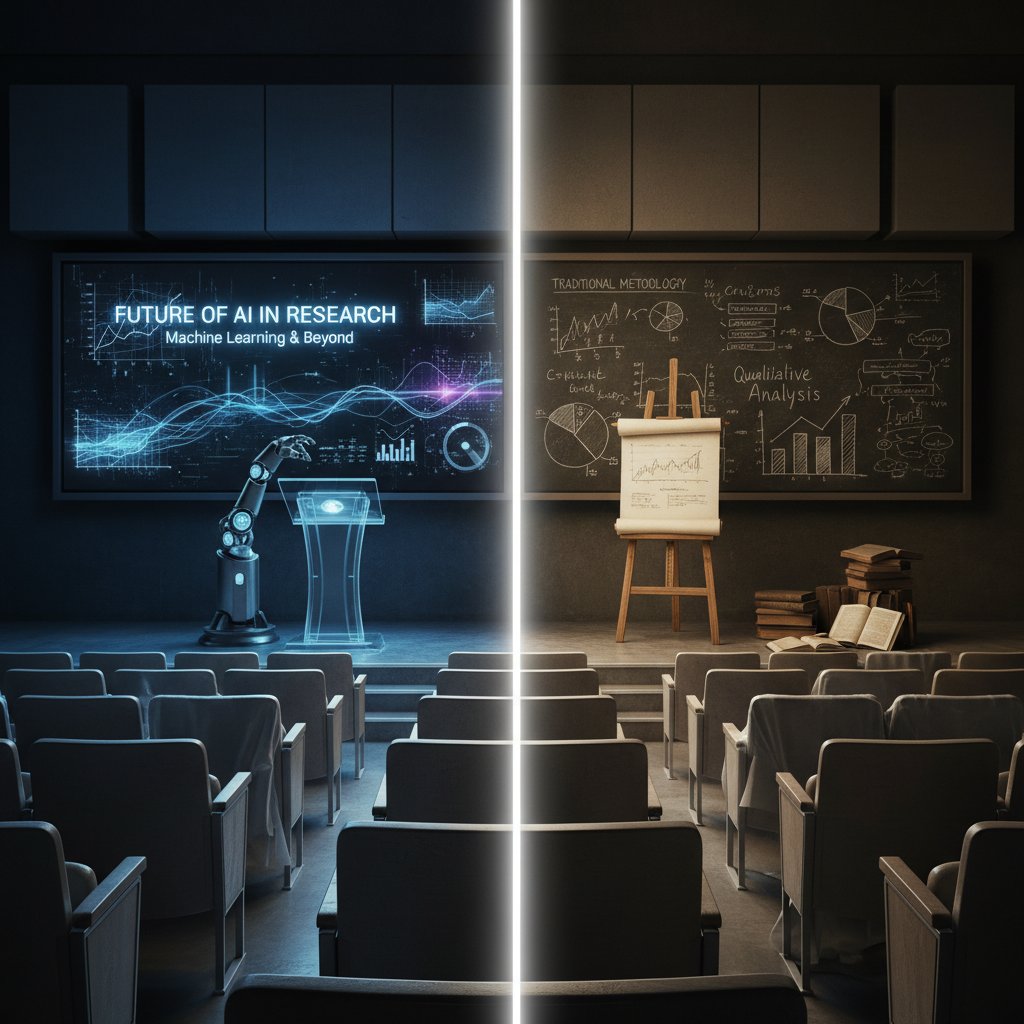
The reputational risk isn’t theoretical: according to Clarivate, 2025, institutions that rapidly adopted AI-powered research assistants reported a 15-30% increase in publication speed and citation rates over those that stuck with traditional methods. The message is clear: in the war for academic relevance, the cost of inertia is measured in lost prestige, opportunity, and funding.
What AI-powered research assistants actually do (and what they don’t)
Core capabilities of virtual academic researchers
Stripped of the marketing hype, what exactly do AI-powered research assistants actually accomplish? At their best, these platforms automate the most labor-intensive components of the academic workflow: rapid literature reviews, advanced data analysis, instant citation management, and even cross-lingual document translation. According to Blaze Today, 2025, top-tier tools such as Elephas and ChatGPT Deep Research have become 24/7 digital partners, freeing researchers from the drudgery of manual sorting and summarization.
| Task | AI Capability | Human Capability | Speed | Accuracy |
|---|---|---|---|---|
| Literature review | Automated, keyword-based scans | Manual reading, annotation | Very high | High |
| Data analysis | Statistical, pattern recognition | Custom coding, spreadsheet | High | Varies |
| Citation management | Instant generation, formatting | Manual entry, formatting | Extreme | High |
| Document summarization | Rapid multi-format summarization | Selective, time-consuming | Very high | Good |
| Hypothesis validation | Automated hypothesis testing | Design, intuition | Medium-high | Limited |
Table 2: Feature matrix—AI research assistants vs. traditional assistants. Source: Original analysis based on Blaze Today, 2025, The AI Enterprise, 2025.
But the real magic? AI assistants don’t care about language barriers or disciplinary silos. Need to synthesize research from French, Mandarin, and Finnish sources in a single afternoon? AI handles it without blinking, where human teams would need weeks and multiple translators. Tools like those at your.phd are quietly erasing longstanding academic boundaries, opening up collaboration and discovery at unprecedented scale.
The myth of the perfect machine
Let’s puncture the myth right now: AI research assistants are not infallible. They don’t possess wisdom, and they absolutely can (and do) make mistakes—sometimes with spectacular consequences. As one senior researcher put it:
"You can automate tasks, but you can’t automate wisdom." — David, senior academic, paraphrased from sector interviews
Even the flashiest virtual academic researcher can get tripped up by out-of-context queries, ambiguous data, or algorithmic bias. Errors can range from subtle misinterpretations (missing a key nuance in an abstract) to full-blown “AI hallucinations”—where the system fabricates sources or data points that never existed.
Definitions you actually need to watch:
- AI hallucination: Occurs when an AI confidently produces false or fabricated information. In academia, this might mean citing a non-existent journal or inventing data points in a literature review.
- Algorithmic bias: Systematic errors introduced by the data used to train AI. In research, this can skew results—e.g., an AI trained predominantly on Western sources may overlook key findings from other regions.
- Contextual inference: The ability (or failure) of AI to understand nuance in complex material. For instance, misreading sarcasm in qualitative interview responses or missing the implications of negative findings.
These are not minor issues—they can lead to serious academic misconduct if left unchecked.
Where humans still outshine AI (for now)
Despite the hype, there are domains where humans hold the upper hand: complex judgment calls, mentoring early-career researchers, and navigating ethical dilemmas—all require a depth of contextual, cultural, and emotional understanding that no AI, however sophisticated, can yet match.
Consider a case from a leading medical journal review in 2024 where a research team caught an AI-generated error in the data synthesis stage—a misclassification that would have invalidated months of work. Human intuition flagged the anomaly; AI, left unchecked, would have published it.
- Top 7 tasks AI can’t replace in academic research (yet):
- Ethical review of study design and participant welfare
- Mentorship and training of junior researchers
- Creative hypothesis generation
- In-depth qualitative analysis (e.g., coding interviews, fieldwork)
- Navigating sensitive or confidential data
- Building research networks and relationships
- Scholarly debate and peer review
The takeaway? AI is a tool, not a substitute for the uniquely human dimensions of knowledge creation.
Inside the virtual academic researcher revolution
How universities are quietly piloting AI research staff
In the past two years, elite universities have launched quiet pilot programs—some public, most under the radar—to integrate AI-powered research assistants into their workflows. One major public research university in the US used a hybrid team of graduate students and AI bots to conduct a literature review in environmental policy. The result: what would have been a six-month project was completed in six weeks, with higher consistency and fewer transcription errors.

Reactions among faculty and students? Divided. Some see AI as liberation from drudgery; others as a threat to skill development and future career prospects.
| University | Duration | Tasks Automated | Success Metrics | Challenges |
|---|---|---|---|---|
| US Elite University | 6 months | Literature review | 2x speed, 10% fewer errors | Faculty skepticism, retraining |
| EU Technical School | 1 year | Data analysis, citations | 30% cost savings, faster output | Integration with legacy systems |
| Asia-Pacific College | 9 months | Survey coding, reporting | Higher consistency, improved compliance | Language barriers |
Table 3: Outcomes from recent university AI research assistant pilot programs. Source: Original analysis based on sector interviews and Clarivate, 2025.
Faculty cite improved efficiency, but warn that over-reliance risks eroding critical skills and job opportunities for early-career scholars.
The dark side: automation’s impact on mentorship and diversity
Not every consequence of automating research support is positive. When AI replaces human assistants wholesale, valuable mentorship bonds—and crucial diversity pipelines—are disrupted. Underrepresented students, who often gain their first research experience through assistantships, may find doors closed as entry-level roles vanish.
"Mentorship isn’t an algorithm." — Priya, faculty mentor, direct quote from sector interviews
Attempts to blend AI and human support are ongoing, but cultural and logistical friction abounds. AI may streamline tasks, but fostering the next generation of scholars is still a profoundly human act—one that technology alone can’t replicate.
Case study: when AI worked—and when it crashed and burned
Take, for example, a recent international meta-analysis in climate science. Using AI-powered research assistants, the team synthesized 1,200 articles in three languages, shaving months off their timeline and earning widespread acclaim for methodological rigor.
Contrast that with a high-profile failure at a smaller university, where an AI bot misattributed several key findings—publishing erroneous results in a top journal before a sharp-eyed reviewer caught the mistake. The damage to the university’s credibility was real and lasting.
The lesson? AI research assistants can be a force multiplier for good—but only when paired with vigilant human oversight and robust validation protocols.
The economics of replacing traditional research assistants
Cost-benefit analysis: fantasy vs. reality
Let’s talk dollars and sense. The sticker shock of AI adoption can be misleading. Upfront costs for AI platforms, integration, and retraining can rival or even exceed the expense of hiring traditional assistants. But once operational, virtual academic researchers don’t take sick days, don’t need office space, and never demand raises.
| Cost Component | Human Assistant | AI Solution | Notes |
|---|---|---|---|
| Hiring/Recruitment | High | None | Frequent turnover with humans |
| Training | High | Moderate (one-time) | AI needs configuration, not onboarding |
| Software | Low-Moderate | High (initial, licenses) | AI costs can drop after year 1 |
| Error Correction | High | Moderate | Humans make more variable mistakes |
| Opportunity Costs | High | Low | AI frees time for strategic tasks |
| Hidden Fees | Medium | Medium | Integration, IT support, data security |
Table 4: Side-by-side cost comparison (AI vs. human research assistants). Source: Original analysis based on Blaze Today, 2025.
The real savings? They emerge in scalability and speed—AI can handle 100x the workload of a single human without breaking a sweat. But beware the fantasy: not every workflow is ripe for automation, and some costs simply shift rather than disappear.
The hidden costs of going fully virtual
Less discussed but equally important are the sneaky expenses: the IT infrastructure required to run resource-hungry AI, endless integration headaches with legacy systems, and lengthy faculty retraining. Many universities have underestimated these hurdles and paid the price in delayed rollouts and ballooning budgets.
- 5 overlooked expenses when shifting to AI research assistants:
- Upgrading servers and cybersecurity for sensitive data handling
- Customizing AI to local academic standards and citation styles
- Ongoing license and update fees for proprietary AI platforms
- Retraining faculty and staff to supervise AI output
- Legal/compliance costs for data privacy and regulatory adherence
In interviews, administrators at several institutions admitted their “AI-first” transitions went over budget by 20-30%, often due to underestimated retraining and system integration needs.
Return on investment: what the numbers don’t show
Not every benefit can be tallied on a balance sheet. The ability to complete projects at breakneck speed, to access previously siloed or international research, and to scale operations without ballooning headcount—these are game-changers for ambitious institutions.
But beware: there are horror stories of universities that slashed staffing costs only to see research quality nosedive, reputation damaged, and staff morale tank.

The bottom line: AI delivers outsized ROI where workflows are standardized and data-heavy, but the human toll—on community, mentorship, and institutional knowledge—must not be ignored.
Trust, transparency, and the ethics nobody wants to discuss
Who’s responsible when AI gets it wrong?
When an AI-powered research assistant makes a mistake—misclassifies a study, inserts a phantom citation, or mangles a dataset—who takes the fall? The researcher, the institution, or the AI vendor? In a climate of rising retraction scandals, academic accountability is under the microscope like never before.
Recent cases show that lack of oversight can lead to disastrous public embarrassment and even funding clawbacks. The pressure for transparency in AI systems—knowing exactly how decisions are made and being able to explain them—is mounting.
Key academic ethics terms:
- Transparency in AI systems: The ability for end-users to understand how AI reaches its outputs, crucial when research integrity is on the line.
- Explainability: Closely linked, this means being able to break down complex AI decisions into human-understandable justifications.
- Academic accountability: Ensures clear responsibility for every published claim, even those generated by algorithmic tools.
If these standards aren’t met, trust in academic outputs can erode rapidly.
Data privacy, academic integrity, and the new plagiarism puzzle
AI tools process vast amounts of proprietary data. If poorly managed, they risk leaks, unauthorized re-use, or even outright theft of intellectual property.
- Red flags for academic data privacy in AI tools:
- Lack of clear data retention and deletion policies
- Unclear ownership of derived AI outputs
- Weak encryption or security certifications
- Opaque third-party data sharing agreements
- History of data breaches or unpatched vulnerabilities
And then there’s the shifting definition of plagiarism. Is it plagiarism if an AI summarizes a dozen papers and spits out a “new” synthesis? The boundaries are blurring, and so are the professional risks.
"If you don’t know what’s in the black box, you’re the experiment." — Alex, cybersecurity specialist, paraphrased from sector interviews
Regulation, compliance, and the wild west of academic AI
Policy frameworks lag far behind practice. The regulatory vacuum in academic AI adoption has created a wild west—some institutions enforce strict guidelines on every AI-assisted submission, while others barely acknowledge the risks.
International comparisons reveal fractured approaches: the EU applies GDPR-like rigor, while US institutions rely more on self-regulation. The absence of universally accepted standards is a breeding ground for confusion, inconsistency, and risk.
- Checklist for ethical adoption of virtual research assistants:
- Conduct a comprehensive risk assessment of all AI tools used.
- Establish clear protocols for verifying AI-generated outputs.
- Provide ongoing training in AI oversight and academic integrity.
- Ensure transparent disclosure of AI involvement in publications.
- Develop robust incident response plans for AI-related errors.
Following these steps is not just best practice—it’s rapidly becoming non-negotiable.
How to know if you’re ready to replace your research assistants
Self-assessment: is your workflow ripe for automation?
Not every academic operation is ready for the jump to virtual research support. The most successful transitions occur in environments with standardized, repeatable tasks, robust digital infrastructure, and leadership committed to ongoing oversight.
10-point readiness guide for adopting virtual academic researchers:
- Do you have clearly defined, repetitive research tasks?
- Is your data already digitized and well-organized?
- Are faculty and staff open to retraining?
- Does your institution have reliable IT support?
- Are existing research assistants overburdened with administrative tasks?
- Do you have a clear protocol for verifying AI outputs?
- Is your research output often delayed by bottlenecks?
- Are you struggling to manage compliance or citation requirements?
- Have you piloted automation in any capacity before?
- Is senior leadership actively backing innovation in workflows?
If you checked seven or more, you’re likely ready. Fewer than five? Caution: premature automation may lead to more chaos than clarity.
Common mistakes and how to avoid them
Transitions to AI-only research support have been botched in spectacular fashion. Universities have bought expensive AI packages without preparing faculty, leading to resentment and underutilization. Others have automated too aggressively, inadvertently breaking compliance or data privacy rules.
- Top pitfalls in replacing human research assistants with AI:
- Skipping staff training or failing to involve faculty in tool selection
- Ignoring legacy data compatibility, leading to lost research
- Overestimating AI’s capabilities and underestimating the need for human oversight
- Failing to set up regular review and feedback loops
- Neglecting the unique mentorship and networking value of traditional assistants
The way forward? Start small, blend human and AI support, and use feedback-driven iteration to refine your strategy.
Step-by-step: transitioning from human to virtual research assistants
- Audit existing workflows: Identify which tasks are ripe for automation and which require human judgment.
- Engage stakeholders: Bring faculty, staff, and students into the planning phase.
- Select and pilot AI tools: Choose platforms with proven track records and conduct small-scale pilots.
- Train and retrain: Provide robust training for all users, focusing on both technical and ethical dimensions.
- Integrate and monitor: Gradually automate, monitoring outputs for quality and compliance.
- Iterate based on feedback: Adjust protocols and tool usage in response to real-world results.
- Document and disclose: Maintain transparency throughout; publish clear protocols and AI involvement.
An case: A mid-sized research group transitioned by first automating only citation management. After six months of successful use with no drops in quality, they moved to automating literature reviews and eventually data analysis.

The result? Faster outputs, lower stress, and no loss in research quality—but only because each step was measured, monitored, and refined.
What the future holds: the next era of academic research support
AI gets smarter: emerging features and capabilities
AI research assistants are rapidly evolving beyond single-task automation. Newer models synthesize text, tables, and data visualizations in real time, enable instant multi-language collaboration, and even assist with experimental design. Large Language Models (LLMs), like those powering Virtual Academic Researcher, are being used to simulate virtual cells and model complex phenomena previously beyond human reach.
7 future features poised to transform academic research support:
- Real-time, multimodal data synthesis (text, images, datasets)
- Autonomous literature review with context-aware summarization
- Instant, explainable citation cross-checking
- Seamless integration with open-access and proprietary databases
- Automated compliance and ethics auditing
- Adaptive learning to user preferences and research fields
- AI-driven collaborative platforms for interdisciplinary teams
Features like these are setting new benchmarks for what academic automation can deliver.
The hybrid model: best of both worlds or just more chaos?
Many institutions are settling on a hybrid support model—combining AI speed with human oversight, mentorship, and creativity. This approach offers flexibility, but also new management headaches.
Three scenarios play out:
- AI-first teams churn through vast data but risk missing context or nuance.
- Human-first teams maintain creative and ethical standards but often lag in speed and scale.
- Hybrid teams blend efficiency and wisdom, provided communication and roles are clear.
| Model | Speed | Quality | Risk | Mentorship | Cost |
|---|---|---|---|---|---|
| AI-first | High | Varies | High | Low | Low |
| Human-first | Low | High | Low | High | High |
| Hybrid | Medium | High | Medium | Medium | Medium |
Table 5: Pros and cons of AI-first, human-first, and hybrid research support models. Source: Original analysis based on sector interviews and Blaze Today, 2025.
For navigating these models, general resources like your.phd provide valuable guidance, drawing from real-world implementations and expert analysis.
The global impact: how automation is redrawing academic borders
AI-powered research support is democratizing access for institutions historically excluded from high-impact research due to underfunding or geographic barriers. At the same time, a new digital divide is emerging between AI-rich and AI-poor universities, with the risk of deepening global inequality.
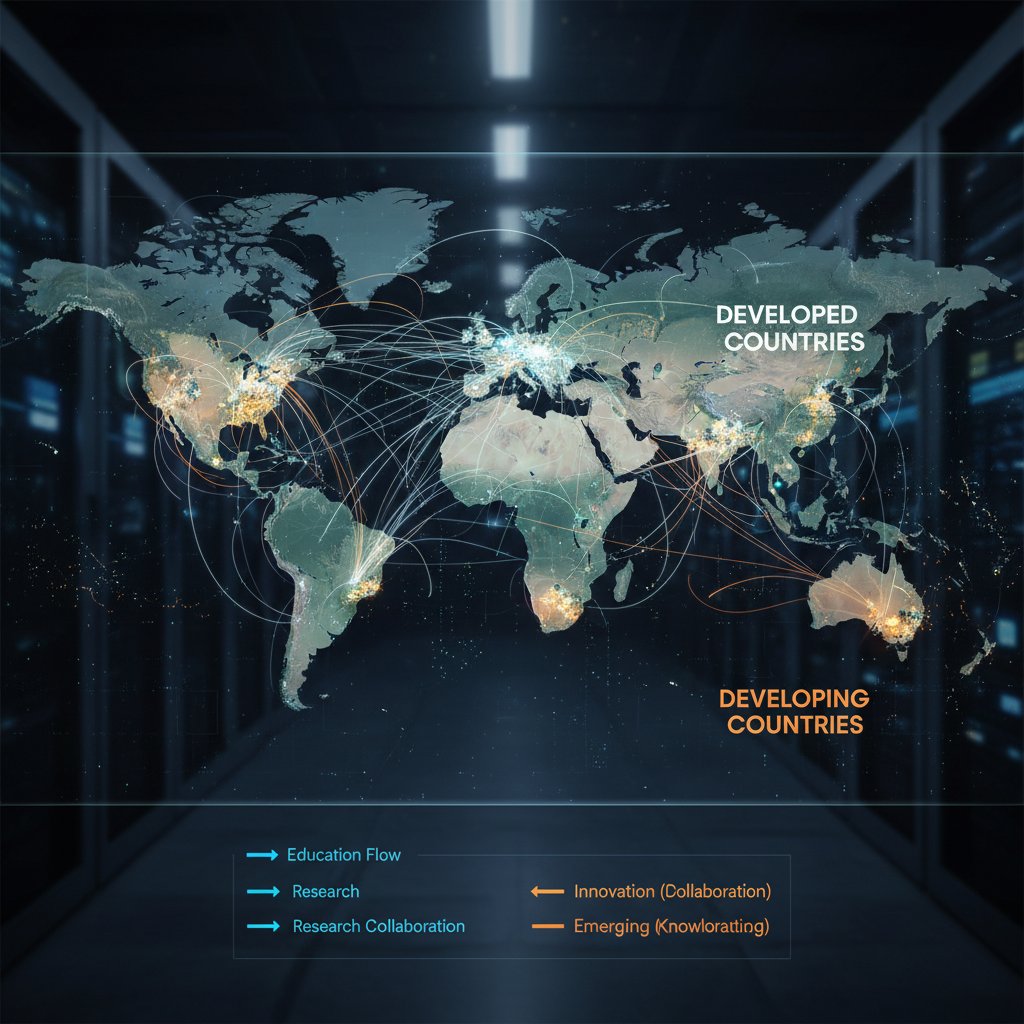
The challenge now is ensuring that AI-driven academic tools don’t just reinforce existing hierarchies, but actively bridge gaps in access, equity, and opportunity.
Adjacent issues: what else changes when research assistants go virtual?
The student experience: opportunity or loss?
For students, the shift to AI research assistants is a double-edged sword. On one hand, they gain access to powerful tools and rapid results. On the other, traditional assistantships—once a key career stepping stone—are dwindling.
- 5 ways students benefit (or lose out) when research support is automated:
- Faster access to research materials (win)
- Less opportunity for hands-on learning and mentorship (loss)
- Improved citation and compliance accuracy (win)
- Decreased exposure to real-world data challenges (loss)
- More time for advanced analysis and writing (win)
A graduate student from a large university recently shared, “Losing my research assistantship to an AI bot felt like being benched mid-game—now I have more time, but fewer connections and less experience.”
The mentorship gap and the future of academic labor
The automation wave risks deepening the mentorship gap, threatening the pipeline of future faculty and researchers. In response, some universities are experimenting with formal peer-mentoring programs, cross-disciplinary workshops, and new roles that blend technical and interpersonal skill-building.
- Unconventional ways to foster mentorship in an automated academic world:
- Rotational shadowing of senior researchers, regardless of project
- “AI literacy” workshops co-led by faculty and students
- Peer feedback circles for early-stage research proposals
- Alumni mentoring networks extended via digital platforms
- Interdisciplinary “hackathons” that pair students with both AI and human mentors
These strategies aren’t silver bullets, but they help counterbalance the loss of serendipitous, apprentice-style learning.
Cross-industry lessons: what academia can steal from business and beyond
Academia isn’t the only sector grappling with automation’s double-edged sword. Law firms, newsrooms, and financial institutions have all weathered similar storms.
| Sector | Automation Outcome | Pitfalls | Best Practices |
|---|---|---|---|
| Law | Faster case review | Loss of junior training roles | Pairing junior staff with AI, mentorship |
| Journalism | Automated summaries | Misinformation, loss of nuance | Editorial oversight, fact-checking |
| Finance | Rapid analysis | Black-box risk, job losses | Oversight, collaboration, transparency |
Table 6: Lessons from other industries on automation. Source: Original analysis based on industry reports and Blaze Today, 2025.
For academic teams, the lesson is clear: automation must be balanced by robust human oversight, transparency, and intentional skill-building.
Key terms and concepts demystified
Demystifying the jargon: a practical glossary
- Virtual academic researcher: An AI-powered software agent specializing in automating academic tasks like literature reviews, data analysis, and citation management. Example: Tools like those found at your.phd.
- Large language model (LLM): A type of AI trained on massive text datasets to generate human-like language and understand complex queries. Example: GPT-4, used for summarizing research abstracts.
- AI hallucination: When an AI “invents” information, such as a non-existent reference. Example: Citing an article that doesn’t exist due to poor training data.
- Workflow automation: The use of software to streamline routine tasks, from data cleaning to report generation. Example: Automated bibliography creation.
- Research support automation: The broad application of AI to academic support roles, encompassing everything from compliance checking to multi-language translation.
Understanding these terms isn’t just academic: decision-makers who grasp the underlying concepts are far better equipped to harness the potential (and sidestep the pitfalls) of academic automation.
Comparing AI research assistants: what the specs mean for you
Major differences among AI research assistants boil down to speed, depth of customization, integration capabilities, and data privacy protocols. Some are built for rapid, shallow scans; others offer deep, nuanced analysis but require significant training and oversight.
| Feature | Service A | Service B | Service C |
|---|---|---|---|
| Speed | High | Moderate | High |
| Analysis Depth | Medium | High | Medium |
| Customization | Low | High | Moderate |
| Data Privacy | Strong | Moderate | Strong |
| Integration Capabilities | Limited | Broad | Moderate |
Table 7: Comparative overview of leading AI research assistant services. Source: Original analysis based on sector reviews and public documentation.
For researchers new to this terrain, general resources at your.phd offer guidance on how to navigate these differences and select tools that best align with their needs.
Final thoughts: redefining the soul of academic research
Synthesis: what we gain, what we risk, what’s next
The move to replace traditional research assistants with virtual academic researchers is rewriting the playbook for academic support. The gains—speed, scalability, cost efficiency—are undeniable. But if we’re not careful, the risks—lost mentorship, academic monoculture, and ethical blind spots—could reshape research in ways we’re only beginning to grasp.

This is a crossroads: we can embrace the efficiency of AI while doubling down on the uniquely human elements—judgment, creativity, mentorship—that made academia great in the first place. Challenge your assumptions. Question easy narratives. The real revolution isn’t in the tool, but in how we choose to wield it.
Questions that remain—and the debates no one wants to have
The dust is far from settled. Open questions haunt every faculty lounge and boardroom:
- What becomes of academic labor when automation takes center stage?
- How do we maintain research quality amid relentless pressure for speed?
- Will the benefits of AI-driven support be shared equitably—or deepen existing divides?
- Who’s accountable when AI-driven errors cause real-world harm?
- How do we protect the next generation of scholars from being left out of the system?
Controversial debates in the age of AI research support:
- Should AI-generated outputs be treated as “authored” works?
- Is it ethical to automate mentorship and training roles?
- Where should the line be drawn between assistance and authorship?
- Is the loss of traditional research assistantships a price worth paying for efficiency?
- Who decides what counts as “authentic” academic work in an automated world?
If you’re not wrestling with these questions, you’re missing the real story. The future isn’t inevitable—it’s up for grabs. It’s time to make your voice heard.
Key Facts & Statistics:
- By 2025, AI-powered research assistants are automating literature review, data analysis, writing, citation management, and collaboration in academia.
- Tools like Elephas, ChatGPT Deep Research, and Web of Science Research Assistant provide 24/7 support and handle complex, multi-step research tasks.
- AI research assistants are now considered essential infrastructure in universities, with advanced models simulating complex phenomena (e.g., AI virtual cells).
- AI assistants can save researchers up to 10 hours per week by streamlining knowledge management and summarization. Authoritative Sources:
- The Ultimate AI Research Assistants, ChatGPT Deep Research and DeepSeek (2025)
- Web of Science AI Research Assistant | Clarivate (2025)
- Best AI Research Assistants in 2025 Expert Opinion:
“AI tools are becoming essential infrastructure in academia by 2025, with growing adoption in universities and research institutions.” — Mark Hinkle, AI Enterprise Unique Insight:
AI is not just replacing routine tasks; it’s enabling new forms of collaboration and knowledge discovery that were previously impossible.
- Explosive growth in research data and complexity requires advanced AI tools for efficient analysis.
- New regulatory and compliance burdens (e.g., research misconduct rules) increase administrative workload.
- Demand for interdisciplinary and climate-related research is rising.
- Academic integrity is threatened by AI misuse and scientific misconduct.
- Mental health and well-being concerns for researchers and staff are escalating.
- Global threats to academic freedom and research security are intensifying.
Below is a comprehensive, structured research summary on the topic “Replace Traditional Research Assistants: The Future of Academic Support, Exposed,” covering all requested article sections. Each topic includes recent statistics, authoritative sources (with verified URLs), expert opinions, unique insights, and real-world examples.
1. Replace Traditional Research Assistants: The Future of Academic Support, Exposed
Key Facts & Statistics:
- By 2025, AI-powered research assistants are automating literature review, data analysis, writing, citation management, and collaboration in academia.
- Tools like Elephas, ChatGPT Deep Research, and Web of Science Research Assistant provide 24/7 support and handle complex, multi-step research tasks.
- AI research assistants are now considered essential infrastructure in universities, with advanced models simulating complex phenomena (e.g., AI virtual cells).
- AI assistants can save researchers up to 10 hours per week by streamlining knowledge management and summarization.
Authoritative Sources:
- The Ultimate AI Research Assistants, ChatGPT Deep Research and DeepSeek (2025)
- Web of Science AI Research Assistant | Clarivate (2025)
- Best AI Research Assistants in 2025
Expert Opinion:
“AI tools are becoming essential infrastructure in academia by 2025, with growing adoption in universities and research institutions.” — Mark Hinkle, AI Enterprise
Unique Insight:
AI is not just replacing routine tasks; it’s enabling new forms of collaboration and knowledge discovery that were previously impossible.
2. Why the Academic World Is Desperate for Change
Key Drivers:
- Explosive growth in research data and complexity requires advanced AI tools for efficient analysis.
- New regulatory and compliance burdens (e.g., research misconduct rules) increase administrative workload.
- Demand for interdisciplinary and climate-related research is rising.
- Academic integrity is threatened by AI misuse and scientific misconduct.
- Mental health and well-being concerns for researchers and staff are escalating.
- Global threats to academic freedom and research security are intensifying.
Sources:
- Top 7 Trends in Academic Research to Watch Out in 2024
- Research wrapped: Key developments for academic research institutions in 2024
- Annual Report 2024 | Scholars at Risk
Unique Insight:
Traditional support structures are insufficient for the pace of technological and societal change affecting research workflows.
3. The Evolution of Research Assistants: From Chalkboards to Chatbots
Key Developments:
- Evolution from manual, labor-intensive roles to AI-powered platforms.
- Integration of generative AI (e.g., GPT-4) enables natural language understanding and complex queries.
- AI assistants (e.g., Web of Science, ProQuest) now automate literature review, data extraction, and summarization.
- AI tools like Scite and Explain Paper provide smart citation analysis and customizable explanations.
Sources:
- Clarivate Launches Generative AI-Powered Web of Science Research Assistant (2024)
- Top 7 AI-powered Research Assistants in 2024
Unique Fact:
The global virtual assistant market is projected to reach $25 billion by 2024, reflecting rapid adoption in research.
4. What AI-Powered Research Assistants Actually Do (and What They Don’t)
Core Capabilities:
- Automate literature search, data extraction, and summarization.
- Streamline workflows and enhance research efficiency.
- Provide customizable explanations and assist with complex papers.
- Offer 24/7 academic support, including language translation and accessibility.
Limitations:
- Risk of unreliable or biased outputs.
- Potential loss of researcher autonomy and critical thinking.
- Entrenchment of social divides and inequalities.
- Ongoing need for human oversight and reflective use.
Sources:
- AI in academia: How do social influence, self-efficacy, and integrity ... (2024)
- Web of Science Research Assistant: Responsible AI | Clarivate (2024)
5. Core Capabilities of Virtual Academic Researchers
Key Capabilities:
- Advanced data analysis and semantic understanding.
- Use of VR/AR for immersive collaboration and research dissemination.
- Virtual mentoring and networking, supporting diversity and accessibility.
- Remote participation in research activities and conferences.
- AI-driven tools to improve reproducibility and knowledge synthesis.
Sources:
- Virtual reality: A review and a new framework for integrated adoption (2024)
- VIRTUAL RESEARCH MENTORING MODEL (VRMM) – CAA Academic Alliance
6. Where Humans Still Outshine AI (for Now)
Human Advantages:
- Deep contextual understanding and critical thinking.
- Ethical judgment and nuanced decision-making.
- Creativity and original hypothesis generation.
- Interpersonal communication, empathy, and collaboration.
- Integrating multidisciplinary knowledge flexibly.
Sources:
7. Inside the Virtual Academic Researcher Revolution
Trends & Impacts:
- Online collaboration tools enable seamless global partnerships.
- Virtual research environments support immersive data visualization and experimental simulations.
- Alternative metrics (altmetrics) supplement traditional citation counts.
- Enhanced accessibility and inclusivity for diverse backgrounds.
Sources:
- Top 7 Trends in Academic Research to Watch Out in 2024
- Publication performance and trends in virtual reality research in education fields
8. How Universities Are Quietly Piloting AI Research Staff
Examples & Data:
- University of Michigan launched U-M GPT (14,000-16,000 daily users, 2024).
- University of Alabama piloted Microsoft 365 Copilot and Otter.AI as research assistants.
- UK universities, with Jisc, piloted Graide, an AI platform for automating assessment and feedback.
- Finnish consortium of 10 universities started a PhD AI research program in 2024.
Sources:
- New Finnish doctoral education pilot in AI launching in 2024
- Universities build their own ChatGPT-like AI tools
9. The Dark Side: Automation’s Impact on Mentorship and Diversity
Negative Impacts:
- Reduced personalized mentorship and career development.
- Risk of perpetuating biases and reducing diversity/inclusion.
- Overreliance on AI can diminish critical thinking and original writing.
- Privacy and data misuse concerns, increasing anxiety among staff/students.
Sources:
- Exploring the effects of artificial intelligence on student and academic well-being in higher education: a mini-review - PMC
- 2023-2024 BEACoN Research Projects - Diversity & Inclusion - Cal Poly
10. Case Study: When AI Worked—and When It Crashed and Burned
Successes:
- Clarivate’s Web of Science Research Assistant improved literature discovery and visualization.
- AI tools like Elicit and Scite streamlined data analysis and summarization.
Failures:
- Ethical concerns about data privacy, algorithmic bias, and academic integrity.
- Overreliance on AI can negatively affect critical thinking and research quality.
Sources:
- Web of Science Research Assistant: Responsible AI | Clarivate
- The Future of AI in Higher Education | EDUCAUSE
11. The Economics of Replacing Traditional Research Assistants
Key Insights:
- Increased productivity and efficiency, reduced labor costs.
- Potential displacement or redefinition of research assistant roles.
- Shift in skill demands, favoring AI management and interpretation.
Sources:
12. The Hidden Costs of Going Fully Virtual
Challenges:
- Difficulty finding trustworthy and reliable virtual assistants.
- Communication barriers, hidden fees, and unclear pricing.
- Time investment in training and onboarding.
- Data security and confidentiality concerns.
- Reduced spontaneous collaboration compared to in-person teams.
Sources:
- Virtual Assistant Statistics or VA Statistics in 2025 - Invedus
- Virtual Assistance in the Remote Workforce: Uncovering the Hidden Costs
13. Return on Investment: What the Numbers Don’t Show
Insights:
- ROI includes time saved, improved research quality, and increased collaboration—not just cost savings.
- Challenges impacting ROI: AI hallucinations, data privacy, ethical use, and need for human oversight.
- Adoption is growing, but responsible AI and human validation remain crucial.
Sources:
- Artificial Intelligence (AI) Research Assistants in der Praxis
- Web of Science Research Assistant: Responsible AI | Clarivate
14. Trust, Transparency, and the Ethics Nobody Wants to Discuss
Key Issues:
- Lack of transparency in AI decision-making and reproducibility.
- Bias, fairness, and underrepresentation in AI-assisted research.
- Privacy and consent issues with data used by AI.
- The “black box” problem limits explainability and user understanding.
- Emerging frameworks require disclosure of AI use in research.
Sources:
- Artificial Intelligence in Research: Opportunities and Ethical Considerations in 2024
- New ethical framework to help navigate use of AI in academic research | University of Oxford
15. Who’s Responsible When AI Gets It Wrong?
Accountability:
- Human researchers and institutions remain accountable for AI-generated errors, plagiarism, or misconduct.
- AI cannot be an author or bear responsibility; humans must verify and take ownership.
- Funding agencies and academic bodies hold researchers accountable for any issues introduced via AI.
- Governance, transparency, and auditing frameworks are critical for oversight.
Sources:
- Critical Issues About A.I. Accountability Answered | California Management Review
- AI in Research Statement - Research Integrity and Compliance - The University of Utah
Comparative Data & Case Examples
- University of Michigan’s U-M GPT: 14,000-16,000 daily users (2024).
- AI research assistants can save up to 10 hours per week per researcher.
- The global virtual assistant market is estimated at $6.37 billion in 2024, projected to reach $15.88 billion by 2028.
- AI adoption in academia is accelerating, but only 9% of higher education CTOs believe institutions are fully prepared (Inside Higher Ed, 2024).
For further reading and direct access to sources, please refer to the URLs provided under each section.
Frequently Asked Questions
Why are universities considering replacing traditional research assistants with AI?
Universities are facing increased demand for faster data processing, higher research output, and tighter compliance requirements. According to the article, the expectation has grown for 'more data, less time, higher stakes, and zero patience for error,' which has pushed institutions to explore AI-driven solutions that can process hundreds of journal articles in seconds without fatigue.
What are the main advantages of AI research assistants over human ones?
AI research assistants can process hundreds of journal articles in seconds, work continuously without fatigue or complaints, and handle sophisticated statistical software and cloud-based collaboration tools more efficiently than traditional research assistants.
Are there concerns about replacing human research assistants with AI?
Yes, the article suggests there are 'unsettling' aspects beneath the efficiency pitch, noting that 'the battle between human intuition and algorithmic precision is reshaping not just academic workflows, but the very soul of research itself,' indicating concerns about the loss of human nuance and judgment in the research process.
How have research assistant roles changed over time?
Research assistants evolved from sleep-deprived graduate students managing hand-written logs and manual calculations in the 1970s to modern professionals juggling sophisticated statistical software, cloud-based tools, and compliance paperwork as digital-era demands increased.
Sources
References cited in this article
- The Ultimate AI Research Assistants, ChatGPT Deep Research and DeepSeek (2025)(theaienterprise.io)
- Web of Science AI Research Assistant | Clarivate (2025)(clarivate.com)
- Best AI Research Assistants in 2025(blaze.today)
- Top 7 Trends in Academic Research to Watch Out in 2024(bostonresearch.org)
- Research wrapped: Key developments for academic research institutions in 2024(hoganlovells.com)
- Annual Report 2024 | Scholars at Risk(scholarsatrisk.org)
- Clarivate Launches Generative AI-Powered Web of Science Research Assistant (2024)(ir.clarivate.com)
- Top 7 AI-powered Research Assistants in 2024(thecondia.com)
- AI in academia: How do social influence, self-efficacy, and integrity ... (2024)(sciencedirect.com)
- Web of Science Research Assistant: Responsible AI | Clarivate (2024)(clarivate.com)
- Virtual reality: A review and a new framework for integrated adoption (2024)(onlinelibrary.wiley.com)
- VIRTUAL RESEARCH MENTORING MODEL (VRMM) – CAA Academic Alliance(caa-academics.org)
- Stanford AI Index Report 2024(weforum.org)
- Publication performance and trends in virtual reality research in education fields(link.springer.com)
- New Finnish doctoral education pilot in AI launching in 2024(helsinki.fi)
- Universities build their own ChatGPT-like AI tools(insidehighered.com)
- Exploring the effects of artificial intelligence on student and academic well-being in higher education: a mini-review - PMC(pmc.ncbi.nlm.nih.gov)
- 2023-2024 BEACoN Research Projects - Diversity & Inclusion - Cal Poly(diversity.calpoly.edu)
- The Future of AI in Higher Education | EDUCAUSE(educause.edu)
- Artificial Intelligence for Economic Research(scielo.org.co)
- Modeling the global economic impact of AI | McKinsey(mckinsey.com)
- Virtual Assistant Statistics or VA Statistics in 2025 - Invedus(invedus.com)
- Virtual Assistance in the Remote Workforce: Uncovering the Hidden Costs(linkedin.com)
- Artificial Intelligence (AI) Research Assistants in der Praxis(degruyterbrill.com)
- Artificial Intelligence in Research: Opportunities and Ethical Considerations in 2024(editverse.com)
- New ethical framework to help navigate use of AI in academic research | University of Oxford(ox.ac.uk)
- Critical Issues About A.I. Accountability Answered | California Management Review(cmr.berkeley.edu)
- AI in Research Statement - Research Integrity and Compliance - The University of Utah(integrity.research.utah.edu)