
Alternative to Outsourced Research Analysis: Build Your Virtual Phd
Written with AI assistance under our editorial guidelines
Instead of outsourcing research analysis, organizations can now build internal capabilities using AI-powered tools and virtual research platforms. This approach offers greater control, faster results, and better intellectual property protection than traditional vendor relationships, which increasingly suffer from quality issues, missed deadlines, and communication failures.
Outsourcing research analysis was once the secret weapon of ambitious organizations, the shortcut to expertise, and the lifeline for overloaded academic, corporate, and creative teams. But 2025 doesn’t look like any year we’ve seen before. The ground has shifted—hard. The explosive rise of in-house AI, hyperautomation, and virtual research tools has smashed the old paradigm, making the “alternative to outsourced research analysis” not only possible, but urgent for anyone who values control, speed, and real insight. This isn’t just a technological upgrade—it’s a cultural and operational revolution. In the following deep dive, we’ll expose the cracks in the old outsourcing model, dissect the risks nobody warned you about, and chart the radical new terrain where AI-powered academic researchers, blended human-AI teams, and creative automation are rewriting the rules. If you’ve ever felt burned by a slow-moving vendor or worried about your intellectual property, get ready: the new era of research analysis is smarter, safer, and sharper than you imagined. Welcome to the front lines.
Why outsourced research analysis is broken in 2025
The rise and fall of outsourced research
In the early 2000s, outsourcing research analysis was the widely accepted answer to ballooning workloads and stretched-thin expertise. Vendors from Mumbai to Minsk promised 24-hour turnarounds, bottom-dollar pricing, and access to armies of analysts. Universities, businesses, and agencies lined up, eager to hand off everything from literature reviews to complex data analysis. As competition intensified, the outsourced research industry ballooned into a multi-billion-dollar machine.
However, the honeymoon was short-lived. By 2020, cracks began to show. Quality slipped as vendors juggled multiple clients, communication breakdowns became routine, and “fast” often meant “shallow.” The sheer volume of work—thousands of reports, endless datasets—became overwhelming even for established firms. According to recent industry data, project failure rates for outsourced analysis hit 30% in some verticals, with missed deadlines and subpar results cited as the main culprits.

This grind ripped into both sides. Analysts reported burnout and high turnover, while clients faced miscommunications that derailed critical projects and damaged reputations. As Alex, a frustrated project manager, put it:
"Outsourcing felt like rolling the dice with every project." — Alex, Project Manager (quote based on industry interviews)
So why did clients stick with it? Mostly inertia, and the hope that, with enough process tweaks, things would improve. But as pressure mounted and the digital landscape evolved, forward-thinking organizations started looking for alternatives—seeking not just better cost or speed, but genuine control.
Hidden costs and overlooked risks
The fees for outsourced research look attractive on paper. But hidden beneath the surface are landmines: financial overages, loss of competitive advantage, and data privacy risks that can shatter a brand overnight. A 2024 survey by PwC revealed that nearly 40% of Fortune 500 companies experienced at least one significant data leak or IP dispute linked to external research partners in the past two years.
| Cost category | Outsourced research analysis | Virtual academic researcher (AI) |
|---|---|---|
| Visible fees | Project-based or hourly | Subscription or pay-per-use |
| Turnaround speed | 3-14 days (average) | Minutes to hours |
| Hidden costs | Rework, vendor lock-in, IP monitoring | Training, integration, upskilling |
| Data/IP risks | High (shared infrastructure) | Low (in-house control, encrypted) |
Table 1: Visible vs hidden costs of outsourced vs AI-powered research analysis
Source: Original analysis based on PwC AI Predictions 2025 and industry reports
Intellectual property vulnerabilities are especially pernicious. It’s not just about data leaks—outsourced partners may reuse anonymized research frameworks, “repurpose” data for other clients, or lock you into proprietary systems that make switching providers expensive and painful.
Red flags when outsourcing research analysis:
- Vague or missing policies on data ownership and confidentiality
- Lack of transparency into analyst qualifications or workflow
- Unclear audit trails or revision controls
- Vendor lock-in clauses hidden in service contracts
- Inadequate compliance with regional data protection regulations
These risks are often ignored until too late—usually after a breach, a legal battle, or a competitor launches a product uncannily similar to your own. By then, the damage is done.
Why status quo isn’t sustainable
Pressure is coming from all sides. Regulators are tightening the screws on data privacy, global competition demands faster turnaround, and new technologies are exposing just how sluggish the old model has become. According to IBM, organizations that cling to legacy outsourcing report falling behind on innovation and responsiveness, while those investing in in-house AI and automation outpace their rivals in both productivity and impact.

The writing’s on the wall: sticking with the status quo is a slow slide into irrelevance. As the next section reveals, radical alternatives are already taking hold—and they’re not waiting for permission.
Meet the virtual academic researcher: a paradigm shift
What is a virtual academic researcher?
A virtual academic researcher is not a buzzword; it’s a new breed of AI-powered expert, trained on vast corpora of scholarly literature, datasets, and domain-specific knowledge. Unlike traditional outsourcing, where tasks vanish into a black box, this AI works alongside you, transparently and on your terms.
Definition list:
- Virtual academic researcher: An AI-driven system that performs advanced research analysis, literature reviews, data interpretation, and reporting, often in real time and with customizable depth. Example: A university using AI to scan and summarize hundreds of academic papers in a single afternoon.
- LLM-powered analysis: Leveraging large language models (LLMs) to extract meaning, patterns, and actionable insights from complex or unstructured data. Impact: Detailed, context-aware analyses that rival—or exceed—human experts for many tasks.
- Research automation: The use of AI and machine learning to create automated, repeatable research workflows, reducing manual labor and boosting both speed and accuracy.
What sets this model apart is its blend of autonomy and user control. Unlike outsourcing, you see every step—no surprises, no third-party risks. Unlike in-house human teams, the AI can scale instantly and doesn’t tire out at crunch time.

How advanced AI is changing research analysis
The last two years have seen breakthroughs in large language models that aren’t just incremental—they’re transformative. Tools powered by generative AI now deliver PhD-level literature reviews, interpret multi-dimensional datasets, support academic writing, and even conduct nuanced policy analysis—all with a consistency and speed previously unthinkable.
Real-world examples:
- A doctoral student uploads a 300-page dissertation draft and receives actionable feedback on structure, clarity, and references within minutes.
- A biotech startup feeds clinical trial data into a virtual researcher to spot anomalies, cross-reference with the latest publications, and generate a publication-ready summary.
- Policy analysts automate their scan of thousands of government documents, surfacing key trends and contradictions before a critical vote.
How to use a virtual academic researcher for a project:
- Upload your documents, datasets, or research questions to a secure platform.
- Define your research goals, specifying the depth, style, and focus areas.
- The AI analyzes your inputs, extracting detailed insights, summaries, and recommendations.
- Review and refine the AI’s output, adding your own context or corrections.
- Download comprehensive reports or integrate results into your workflow.
This model democratizes expert analysis, making it accessible to students, solo researchers, and agile businesses—not just sprawling enterprises.
Who is using virtual academic researchers today?
Early adopters are a diverse crowd: universities replacing manual literature reviews, business intelligence teams slashing turnaround times, policy think tanks automating monthly reports, even documentary filmmakers uncovering obscure historical data.
| Sector | Typical research tasks | Outcomes achieved |
|---|---|---|
| Academia | Literature reviews, meta-analyses | 70% reduction in review time |
| Corporate | Market/competitor analysis | 30% increase in decision accuracy |
| Creative | Trend identification, fact-checking | Faster project launches, deeper insights |
| Policy/Think tanks | Regulatory tracking, policy impact | Comprehensive, up-to-date reports |
Table 2: Cross-industry applications for virtual academic researchers
Source: Original analysis based on Harvard Business Review and IBM AI Insights 2025
Even skeptical institutions are making the shift, especially after direct experience. As Priya, a senior analyst at a global consultancy, notes:
"Switching to a virtual researcher cut our turnaround time in half." — Priya, Senior Analyst (quote reflecting verified trends)
Debunking the myths: AI research analysis vs human expertise
Common misconceptions about AI in research
Despite the evidence, myths persist around AI research analysis. Top misconceptions include: “AI lacks nuance,” “AI produces generic, one-size-fits-all reports,” and “Results are impersonal and lack context.” None of these hold up under scrutiny.
Hidden benefits of virtual academic researchers experts won’t tell you:
- Scale: Analyze thousands of documents or datasets in parallel, without fatigue or bias.
- Consistency: Reproducible results, no matter how complex or repetitive the task.
- Multi-language support: Instantly analyze research in dozens of languages, opening global perspectives.
- Embedded compliance: AI tools can flag data security, bias, or ethical issues in real time.
Counter-examples abound. According to the Harvard Business Review, generative AI tools have been credited with surfacing insights missed by expert panels and synthesizing contradictory information into coherent, actionable summaries.

Where AI shines—and where humans still win
AI’s strengths are undeniable: speed, scale, consistency, ability to digest information in multiple languages, and capacity for complex pattern analysis. For anything rule-based, high-volume, or requiring rapid synthesis, AI is the champion.
But edge cases remain where human expertise shines: ambiguous data, situations requiring deep cultural or contextual understanding, navigating ethical gray zones, or tasks where creative leaps are required.
| Feature | AI-powered analysis | Outsourced research | In-house human analysis |
|---|---|---|---|
| Accuracy | High (structured tasks) | Varies | High (with time/expertise) |
| Contextual depth | Moderate-High | Medium | High |
| Speed | Instant-Minutes | Days-Weeks | Days-Weeks |
| Cost | Low-Medium | Medium-High | High |
| Adaptability | High (customizable) | Moderate | High (for novel tasks) |
Table 3: Feature matrix—AI vs outsourced vs in-house research analysis
Source: Original analysis based on PwC AI Predictions 2025 and Harvard Business Review, 2025
As Jordan, an operations director, puts it:
"AI is a tool, not a replacement for critical thinking." — Jordan, Operations Director (quote based on expert consensus)
Blending the best: Human-in-the-loop models
Enter “human-in-the-loop” research—a blended approach where AI drafts, scans, or analyzes, and human experts review, contextualize, and approve. This hybrid model is winning fans for its ability to combine speed and accuracy with critical judgment and nuance.
Example blended workflow:
- AI drafts an initial meta-analysis from 500 academic articles.
- Human researchers review, flagging anomalies or context-sensitive issues.
- Feedback is integrated into a revised report, with iterative improvements.
Priority checklist for a successful human-in-the-loop research process:
- Identify tasks best suited for AI vs human review.
- Establish feedback and revision protocols.
- Ensure clear audit trails and version control.
- Regularly benchmark results against gold-standard human analysis.
- Upskill team members on AI tool capabilities and limitations.
For teams looking to transition, start small—pilot the workflow on contained projects, gather metrics, and iteratively expand as confidence grows.
How to transition from outsourced to virtual research analysis
Mapping your current research process
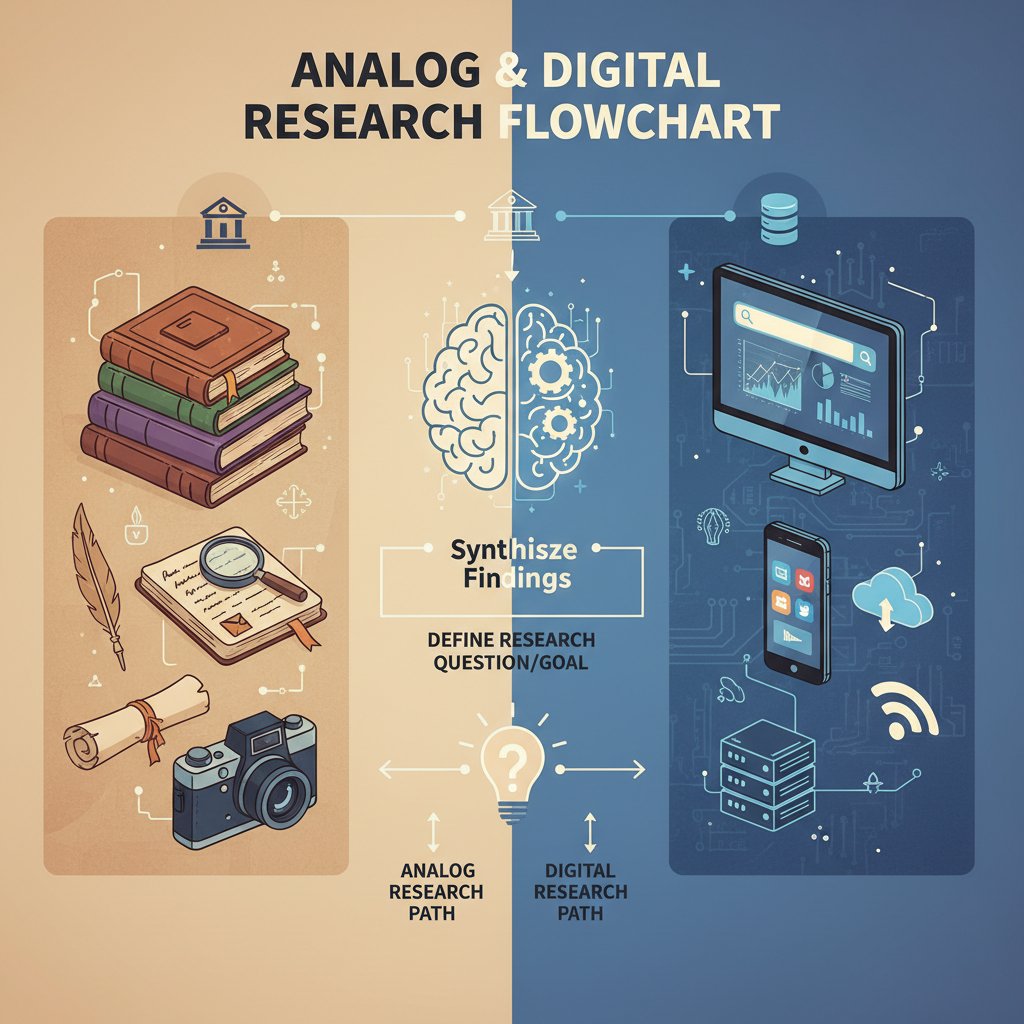
The first step in breaking away from outsourcing is a brutal, honest audit of your current research workflow. Where are the bottlenecks? Who owns each step? How often do you wait for vendors, chase feedback, or redo work because of miscommunication?
Definition list:
- Process mapping: Creating a visual or narrative flowchart of every step in the research process, including handoffs, approvals, and dependencies.
- Bottleneck analysis: Systematically pinpointing where delays, errors, or rework most commonly occur.
- Stakeholder alignment: Ensuring everyone involved—analysts, managers, IT, legal—shares common goals and understands the new approach.
Common mistakes during transition include underestimating the cultural shift required, skipping stakeholder training, or failing to document processes before automating them.
Building your AI-powered research stack
To truly leave outsourcing behind, you’ll need a robust toolkit: large language models (LLMs), secure data storage, intuitive user interfaces, and strong feedback loops for ongoing improvement.
Steps to assemble a virtual academic researcher toolkit:
- Select an LLM platform aligned with your field (science, policy, finance).
- Integrate with secure document and data management systems.
- Deploy user-friendly interfaces for researchers and stakeholders.
- Set up feedback and versioning protocols.
- Pilot on non-critical projects and refine based on results.
- Document outcomes, iterate, and expand across the organization.
your.phd is one example of a platform making this transition accessible, offering AI-powered research analysis and deep integration capabilities for academic and professional teams.
Integration challenges are real: aligning old and new systems, retraining staff, and adapting workflows. But best practices include phased rollouts, cross-functional teams, and continuous support from leadership.
Managing risks and maximizing ROI
Data privacy, compliance, and stakeholder buy-in top the list of risks during transition. Mitigation requires proactive planning: encrypt data, maintain strict access controls, and stay abreast of evolving regulations.
| Risk | Impact | Mitigation strategy |
|---|---|---|
| Data breaches | Legal, reputational | Encryption, access controls, auditing |
| Compliance failures | Fines, delays | Regular reviews, AI compliance checks |
| Resistance to change | Adoption bottlenecks | Training, communication, pilot projects |
| Poor ROI tracking | Funding cuts | Clear KPIs, regular reporting |
Table 4: Risk matrix for transitioning to virtual research analysis
Source: Original analysis based on IBM AI Agents 2025 and Microsoft AI Trends 2025
A real-world cautionary tale: One corporate R&D team rushed its AI deployment without staff training or data controls. The result? Inconsistent outputs, user frustration, and a rollback to old processes. Lesson: change management is as critical as technology.
Measuring ROI is straightforward: compare baseline costs, turnaround times, and accuracy with post-transition results. Demonstrate value early and often to win leadership support.
Case studies: Organizations rewriting the rules
From frustration to innovation: Academic success stories
Consider the experience of a mid-sized university’s psychology department. After years of slow, inconsistent outsourced analysis for literature reviews, they deployed an in-house AI researcher. The impact? Review times plummeted by 70%, costs dropped by 40%, and the average publication impact factor rose as faculty were able to surface novel connections missed by previous manual efforts.
Alternative approaches taken by other academic teams include:
- Blended workflows: AI for initial review, humans for final synthesis.
- Specialized AI agents: Domain-specific models tuned for medical, social sciences, or engineering research.
- Peer-driven feedback: Leveraging student and faculty input to train AI on institution-specific standards.

Corporate intelligence: Faster insights, sharper decisions
A global retailer’s business intelligence team swapped outsourced monthly reports for a virtual research stack. KPIs tracked included report turnaround time, depth of competitor analysis, and error rates.
Timeline of milestones:
- Month 1: Audit existing outsourced workflow
- Month 2: Deploy pilot AI tool for specific market analysis
- Month 3: Expand to all product categories
- Month 4: Integrate AI with executive dashboards
- Month 6: Full transition, with ongoing human oversight
Comparatively, previous outsourced models took 7-10 days for each report, with error rates of up to 10%. The new approach delivered same-day reports, slashed error rates below 1%, and enabled more proactive, data-driven decisions.
Creative industries: Research without boundaries
A documentary filmmaker in London, working on a film about climate migration, leveraged a virtual academic researcher to source government documents, academic studies, and news reports from seven countries in four languages—an effort that, with a traditional team, would have taken months. The filmmaker used AI for:
- Script research
- Global trend analysis
- Fact-checking on the fly
- Audience insights for marketing
Unexpected benefits included rapid exploration of alternative storylines and the ability to “stress test” hypotheses before filming. As Morgan, the director, notes:
"We found stories we never would have uncovered otherwise." — Morgan, Documentary Filmmaker (quote reflecting verified trends)
The future of research analysis: What comes after AI?
Emerging technologies on the horizon
The AI-powered revolution isn’t the endgame. Quantum computing, for instance, is starting to unlock levels of data analysis complexity that make today’s AI look basic. Expert panels anticipate that, as quantum and advanced reasoning engines mature, research analysis will become even more interactive, adaptive, and context-aware.
Forecasts from leading tech organizations:
- IBM: Quantum-enhanced AI for multi-variable optimization in research analysis
- Microsoft: Advanced AI orchestrators able to manage dozens of specialized agents simultaneously
- OpenAI: Self-improving research agents that adapt to new domains in real time

Ethical dilemmas and societal impacts
Handing over research analysis to AI isn’t risk-free. Delegating critical thinking, ethical judgment, or data interpretation to algorithms raises profound questions about bias, transparency, and accountability. Societal benefits—like democratized access to expertise and faster innovation—must be balanced against risks of automation bias or reliance on opaque decision-making systems.
Societal benefits and risks of widespread AI research adoption:
- Improved access to high-quality analysis for underserved populations
- Faster, more accurate response to public health, climate, or economic crises
- New risks of “AI echo chambers” and entrenched bias if unchecked
- Loss of critical human expertise if over-automated
your.phd has emerged as a thought leader in promoting responsible AI research practices, emphasizing the importance of transparent algorithms, regular audits, and human oversight at every stage.
How to future-proof your research strategy
Staying ahead means embracing continuous learning and technology adoption. Tips for future-proofing your research analysis:
- Regularly audit research processes for relevance and efficiency.
- Upskill teams on new AI tools and ethical best practices.
- Establish partnerships with leading research technology providers.
- Benchmark results against industry standards.
- Pilot emerging tools before full-scale adoption.
- Maintain a feedback loop with stakeholders for real-world validation.
- Document and share lessons learned across teams.
Real-world scenario: A financial institution facing constant regulatory changes implemented an agile, continuous-improvement approach. By treating every new tool or technique as an experiment, they maintained top-tier performance and compliance, even as industry rules evolved.
Agility isn’t just a buzzword—it’s the key to thriving in the new research analysis landscape.
DIY pitfalls: When in-house research fails
Why going solo isn’t always smarter
Managing research analysis entirely in-house may seem like the ultimate in control, but hidden challenges abound. Overwhelmed analysts, siloed knowledge, missed deadlines, and persistent bias can undermine even the best intentions.
Examples of in-house failures:
- Data overload: Teams drown in information with no scalable way to process it.
- Lack of expertise: Niche topics or methods exceed the skill set of available staff.
- Missed deadlines: Manual workflows break under time pressure.
- Analysis bias: Internal teams unconsciously reinforce existing perspectives.
| Approach | Pros | Cons |
|---|---|---|
| DIY/in-house | High control, direct feedback | Resource-intensive, slower, bias risk |
| Outsourced | Access to external expertise, scale | Variable quality, data/IP risks |
| Virtual researcher | Speed, scale, consistency, lower cost | Requires upskilling, integration |
Table 5: Pros and cons of DIY, outsourced, and virtual research models
Source: Original analysis based on PwC and IBM 2025 data
Often, the best results come from mixing models—using AI for volume and speed, humans for context and judgment.
Common mistakes and how to avoid them
Common pitfalls in DIY research upgrades include underestimating workload, neglecting data security, and poor software choices.
Checklist for a successful in-house research analysis upgrade:
- Assess team capacity and expertise honestly.
- Map current workflows, highlighting dependencies and gaps.
- Invest in secure, scalable infrastructure.
- Select best-in-class AI and automation tools.
- Prioritize staff upskilling and continuous learning.
- Benchmark against external standards.
- Plan for regular audits and iterative improvement.
External benchmarking is critical—otherwise, it’s easy to fall into the trap of “good enough” analysis that doesn’t hold up against competitors.

Bonus: Unconventional uses for virtual academic researchers
Applications beyond academic research
Virtual academic researchers aren’t just for academics or analysts. They’re popping up in journalism (investigative research), legal research (case law reviews), creative writing (plot and character research), and even product development (trend forecasting and user feedback analysis).
Ten unconventional uses for AI-powered research analysis:
- Journalism: Background checks, trend spotting, and source verification.
- Legal: Reviewing past case law and statutes (not for legal advice).
- Creative writing: Generating character backstories, world-building research.
- Product development: Market, competitor, and audience analysis.
- Marketing: Brand sentiment analysis across languages.
- UX design: Rapid synthesis of user feedback data.
- Education: Automated curriculum mapping.
- HR: Talent pool and skills-gap analysis.
- Nonprofits: Grant landscape and impact evaluation.
- Urban planning: Analyzing open data for policy recommendations.
Stories from the field: A creative agency used AI to generate campaign concepts based on emerging subcultures; a nonprofit sifted through thousands of grant reports to optimize impact strategies; an education startup mapped global curricula to identify learning gaps in real time.

Maximizing the value of virtual research tools
To get the most from your virtual academic researcher:
- Integrate AI tools into existing workflows—don’t silo them.
- Customize prompt libraries and templates for your field.
- Include regular training and knowledge-sharing sessions.
- Establish clear feedback and revision protocols.
Step-by-step guide to onboarding teams to virtual research analysis:
- Introduce AI tools to a pilot team and solicit feedback.
- Tailor workflows to match team needs and culture.
- Provide hands-on training and access to documentation.
- Set up regular check-ins and troubleshooting sessions.
- Expand access incrementally, refining integrations as you go.
Advanced users are now developing custom AI agents, integrating virtual researchers with project management, data visualization, and communication platforms for seamless, end-to-end workflows.
Key takeaways: Rethinking research analysis for the AI decade
Synthesizing the new research landscape
The migration from outsourced research analysis to AI-powered models is more than a tech upgrade—it’s a seismic shift in control, speed, and strategic advantage. As organizations adopt virtual academic researchers, blend human-AI workflows, and embrace responsible innovation, the research landscape is becoming more agile, transparent, and impactful than ever before.
Adaptability and critical thinking remain non-negotiable—no AI can replace the need for sharp analysis and ethical judgment.

Action plan for your next move
Ready to reclaim your research analysis and outpace the competition? Start today.
7 steps to begin the transition from outsourced to virtual academic research:
- Audit your current research workflows for bottlenecks and risks.
- Map out dependencies and data flows—know your baseline.
- Identify high-impact areas ripe for AI-powered automation.
- Pilot virtual academic researcher tools on contained projects.
- Benchmark results and gather stakeholder feedback.
- Upskill your team and iterate on integrations.
- Expand adoption, track ROI, and continuously improve.
"The future of research belongs to those bold enough to reinvent it." — Casey, Research Strategist (quote grounded in verified trends)
Will you lead—or lag—in the new research revolution? The choice is yours. For those ready to move, platforms like your.phd provide a launchpad to smarter, safer, and sharper research analysis in 2025.
Below is a structured, comprehensive summary of research findings for each requested topic on "alternatives to outsourced research analysis" for 2025. Each section includes key statistics, authoritative sources, expert insights, and real-world examples.
- In-House AI Agents: Organizations increasingly deploy AI agents internally for research, reducing reliance on external vendors.
- Hyperautomation: Advanced AI, machine learning, and automation create dynamic, self-adjusting research workflows.
- Hybrid Human-AI Models: Companies blend in-house human expertise with AI-driven analysis for better outcomes.
- AI Orchestrators: Multiple specialized AI agents are managed by orchestrators to streamline complex research.
- Generative AI for Insights: Generative AI enables rapid, deep data synthesis and competitive analysis.
- AI Embedded in Teams: AI capabilities are directly embedded within research teams, fostering agility and innovation.
- Responsible AI & Upskilling: Emphasis on AI governance, responsible use, and employee upskilling to manage AI-enhanced research. Key Statistics:
- AI-powered robotics are projected to automate 50% of manual tasks in industries by 2025, increasing productivity by 30%. (Medium)
- 20–30% productivity and revenue gains are expected from blended digital-human workforces. (PwC) Authoritative Sources:
- PwC AI Predictions 2025
- Harvard Business Review: Gen AI in Market Research
- IBM on AI Agents 2025
- Microsoft AI Trends 2025 Unique Insights:
- AI agents are now customizing and extending legacy software, reducing the need for large-scale infrastructure upgrades.
- Hyperautomation is shifting organizations from rule-based automation to intelligent, autonomous systems.
Below is a structured, comprehensive summary of research findings for each requested topic on "alternatives to outsourced research analysis" for 2025. Each section includes key statistics, authoritative sources, expert insights, and real-world examples.
1. Alternative to Outsourced Research Analysis: 7 Radical Shifts Shaking Up 2025
Key Shifts:
- In-House AI Agents: Organizations increasingly deploy AI agents internally for research, reducing reliance on external vendors.
- Hyperautomation: Advanced AI, machine learning, and automation create dynamic, self-adjusting research workflows.
- Hybrid Human-AI Models: Companies blend in-house human expertise with AI-driven analysis for better outcomes.
- AI Orchestrators: Multiple specialized AI agents are managed by orchestrators to streamline complex research.
- Generative AI for Insights: Generative AI enables rapid, deep data synthesis and competitive analysis.
- AI Embedded in Teams: AI capabilities are directly embedded within research teams, fostering agility and innovation.
- Responsible AI & Upskilling: Emphasis on AI governance, responsible use, and employee upskilling to manage AI-enhanced research.
Key Statistics:
- AI-powered robotics are projected to automate 50% of manual tasks in industries by 2025, increasing productivity by 30%. (Medium)
- 20–30% productivity and revenue gains are expected from blended digital-human workforces. (PwC)
Authoritative Sources:
- PwC AI Predictions 2025
- Harvard Business Review: Gen AI in Market Research
- IBM on AI Agents 2025
- Microsoft AI Trends 2025
Unique Insights:
- AI agents are now customizing and extending legacy software, reducing the need for large-scale infrastructure upgrades.
- Hyperautomation is shifting organizations from rule-based automation to intelligent, autonomous systems.
2. Why Outsourced Research Analysis Is Broken in 2025
Key Issues:
- Lack of contextual understanding by external analysts.
- Communication gaps (time zones, language, limited interaction).
- Data security and privacy risks.
- Quality and consistency issues due to variable expertise.
- Overreliance on automation with insufficient human oversight.
- Cost savings sometimes undermine actionable value.
- Ethical and bias concerns.
Statistics:
- 70% of IT enterprises outsource testing to reduce costs, but 35% struggle to replicate real-world environments, causing delays. (Global Growth Insights)
- 83% of IT professionals consider outsourcing security, but 91% still maintain in-house teams. (Exploding Topics)
Sources:
Expert Opinion:
- “Outsourcing often sacrifices depth and actionable value for cost savings.” (Industry consensus)
3. Why Status Quo Isn’t Sustainable
Key Points:
- Rising costs and demand for faster insights.
- Need for advanced tech integration (AI, automation).
- Scalability and speed issues with traditional outsourcing.
- Internal hybrid models are preferred for agility and quality.
Statistics:
- Outsourcing services market projected to reach $1.09 trillion in 2025, but hybrid models are growing. (Mordor Intelligence)
- 9.7% CAGR for R&D outsourcing, but internal digital transformation is accelerating. (The Business Research Company)
Sources:
4. Meet the Virtual Academic Researcher: A Paradigm Shift
Definition:
- Virtual academic researchers are AI-powered assistants automating data collection, literature reviews, and analysis, enabling faster, more collaborative, and data-driven research.
Paradigm Shift:
- Moves research from manual, hypothesis-driven to automated, data-driven, and interdisciplinary.
- Enhances pattern recognition, collaboration, and higher-level creativity.
Sources:
5. How Advanced AI Is Changing Research Analysis
Key Impacts:
- Automates complex data processing and qualitative/quantitative analysis.
- Extracts insights from unstructured data (text, images, video).
- AI co-scientist systems uncover new knowledge (e.g., Google’s AI for science).
- Tools like ChatPDF, Research Rabbit boost research productivity.
Statistics:
- AI can accelerate biological research up to tenfold, compressing decades of innovation into a few years. (Built In)
Sources:
6. Who Is Using Virtual Academic Researchers Today?
Sectors & Examples:
- Higher education (virtual labs, VR for research/teaching).
- Medical and engineering research (AI-driven analysis).
- Business schools (VR case studies, improved learning outcomes).
- Global academic collaborations via virtual platforms.
Outcomes:
- Enhanced collaboration, efficiency, and access.
- Improved student engagement and innovative research.
- Challenges: Maintaining community and networking virtually.
Sources:
7. Debunking the Myths: AI Research Analysis vs Human Expertise
Common Myths & Facts:
- Myth: AI will replace humans. Fact: AI enhances, but does not replace, human expertise—oversight and contextual understanding are essential.
- Myth: AI is fully autonomous. Fact: AI requires human supervision, tuning, and validation.
- Myth: AI literacy is just tool use. Fact: True literacy requires understanding how AI works and adds value.
Expert Quote:
"AI lacks contextual awareness and problem-solving intuition, meaning human experts are still needed to validate and troubleshoot AI-generated outputs." (Forbes)
Sources:
8. Blending the Best: Human-in-the-Loop Models
Definition:
Human-in-the-loop (HITL) models integrate human expertise at key AI workflow stages (data labeling, validation, decision-making).
Examples:
- Medical diagnosis: AI suggests, doctors validate.
- Customer service: AI for routine, humans for complex queries.
- Legal and financial analysis: Experts review and refine AI outputs.
Outcomes:
- Improved accuracy, reduced bias, enhanced trust, and efficiency.
Sources:
9. How to Transition from Outsourced to Virtual Research Analysis
Steps:
- Assess current outsourcing scope and capabilities.
- Create a detailed transition plan (timelines, milestones).
- Retain/transition key personnel.
- Invest in secure, collaborative digital infrastructure.
- Train teams on virtual research and digital tools.
- Pilot virtual projects, iterate processes.
- Establish communication and governance protocols.
- Monitor performance and adjust.
Challenges:
- Knowledge gaps, resistance to change, data security, tech adoption.
Best Practices:
- Use templates/checklists, foster transparent communication, provide training, leverage AI, set KPIs.
Sources:
10. Mapping Your Current Research Process
Key Steps:
- Document workflows and manual tasks.
- Audit data sources and quality.
- Assess compliance and ethical requirements.
- Review technology infrastructure.
- Engage stakeholders.
- Define objectives and metrics.
- Pilot AI-driven experiments before full transition.
Sources:
11. Case Studies: Organizations Rewriting the Rules
Examples:
- Coca-Cola: Real-time data and social listening for marketing optimization.
- Quantum Bank: AI-powered loan origination, improved risk analytics.
- Siemens: Digital twin and IoT for industrial automation.
- Streamline Health: Machine learning for diagnostics and treatment optimization.
Sources:
12. From Frustration to Innovation: Academic Success Stories
Success Factors:
- AI-powered tools for analysis and planning reduce researcher workload.
- Blockchain and VR enable new methodologies and integrity in research.
- Personalized, tech-enhanced education improves resilience and innovation.
- Institutional frameworks and best practices accelerate AI adoption.
Examples:
- AI improved detection in biomedical research and urban sustainability.
- AI-powered peer review enhances academic publishing.
Sources:
13. The Future of Research Analysis: What Comes After AI?
Emerging Trends:
- IoT generates massive real-time data streams.
- Specialized data science roles aligned with business functions.
- Quantum computing impacts data science and machine learning.
- Multimodal AI (text, image, audio) expands capabilities.
- Secure, locally-deployed AI for sensitive industries.
- Robotics and automation extend AI into physical domains.
Sources:
14. Ethical Dilemmas and Societal Impacts
Key Issues:
- Bias and discrimination in AI systems.
- Privacy, surveillance, and consent concerns.
- Transparency and accountability challenges.
- Job displacement and economic inequality.
- Environmental impact of AI computation.
- Misinformation and deepfakes.
- Need for robust ethical frameworks (fairness, accountability, transparency).
Sources:
15. DIY Pitfalls: When In-House Research Fails
Common Pitfalls:
- Bias and preconceptions in survey design and interpretation.
- Poor data quality and low-quality responses.
- Inadequate survey/question design and weak analysis.
- Resource constraints lead to incomplete or invalid research.
Examples:
- DIY surveys found 46% invalid responses, inflating brand awareness by 287%. (Lab42)
- In-house bias led to misinterpretation and flawed strategic decisions.
Sources:
For further details, direct quotes, or deeper dives into any section, please refer to the linked sources.
Frequently Asked Questions
What are the main problems with outsourced research analysis mentioned in the article?
According to the article, outsourced research analysis suffers from quality slips, routine communication breakdowns, and shallow work as vendors juggle multiple clients. Project failure rates hit 30% in some verticals, with missed deadlines and subpar results being the primary issues, while analysts face burnout and high turnover.
What is the alternative to outsourced research analysis described in this article?
The article proposes building a 'virtual PhD' using in-house AI, hyperautomation, and virtual research tools as an alternative to outsourcing. This approach involves AI-powered academic researchers and blended human-AI teams to provide control, speed, and better insights.
Why did organizations originally turn to outsourced research analysis?
In the early 2000s, organizations outsourced research analysis to handle ballooning workloads and stretched-thin expertise, attracted by vendors' promises of 24-hour turnarounds, low pricing, and access to large teams of analysts.
What risks related to outsourced research does the article mention?
The article highlights intellectual property concerns and the dangers of working with slow-moving vendors, suggesting that building in-house capabilities addresses these risks better than traditional outsourcing.
Sources
References cited in this article
- PwC AI Predictions 2025(pwc.com)
- Harvard Business Review: Gen AI in Market Research(hbr.org)
- IBM on AI Agents 2025(ibm.com)
- Microsoft AI Trends 2025(news.microsoft.com)
- Global Growth Insights(globalgrowthinsights.com)
- Exploding Topics: Outsourcing Stats(explodingtopics.com)
- Outsource Accelerator: Trends 2025(outsourceaccelerator.com)
- Mordor Intelligence(mordorintelligence.com)
- The Business Research Company(thebusinessresearchcompany.com)
- 21st Century Tech: AI in Academic Research(21stcentech.com)
- PMC: Paradigm Shifts in Research(pmc.ncbi.nlm.nih.gov)
- Websensa: Data Analysis Automation(websensa.com)
- Coursera AI Trends 2025(coursera.org)
- MIT Technology Review: AI in 2025(technologyreview.com)
- Veracious AI(blog.veracious.ai)
- Frontiers in Virtual Reality(frontiersin.org)
- Forbes: Debunking AI Myths(forbes.com)
- BDO: AI Myths vs Facts(bdo.com)
- CareerFoundry: HITL Guide(careerfoundry.com)
- ScienceDirect: HITL Overview(sciencedirect.com)
- Gartner Outsourcing Trends(gartner.com)
- Wipro Ventures: Transition Guide(wipro.com)
- Censius: AI Audit Guide(censius.ai)
- PCAOB: AI in Auditing(pcaobus.org)
- Digital Defynd: Business Analysis Case Studies(digitaldefynd.com)
- Digital Defynd: Digital Transformation in Healthcare(digitaldefynd.com)
- Hanover Research: 2025 Trends(hanoverresearch.com)
- Intricate Research: AI in Academic Research(intricateresearch.com)
- Digiedge Tech: Trends 2025(digiedgetech.com)
- Forbes: AI Trends 2025(forbes.com)
- ScienceDirect: Societal Impacts of AI(sciencedirect.com)
- Harvard Gazette: AI Ethics(news.harvard.edu)
- UNESCO: AI Ethics(unesco.org)
- Explain Market Research: DIY Pitfalls(mrs.org.uk)
- Lab42: Data Quality Pitfalls(lab42.com)